🚚 Free Worldwide Shipping on All Orders!Shop Now










Alocasia Polly 'African Mask'
-
![]() The Alocasia Polly is a hybrid cultivar of Alocasia amazonica, which itself is thought to be a hybrid of Alocasia watsoniana and Alocasia sanderiana. The original Alocasia species are native to tropical and subtropical Asia, including rainforests in Borneo and the Philippines. The Alocasia Polly is not from Africa, and its "African Mask" nickname is a marketing misnomer.
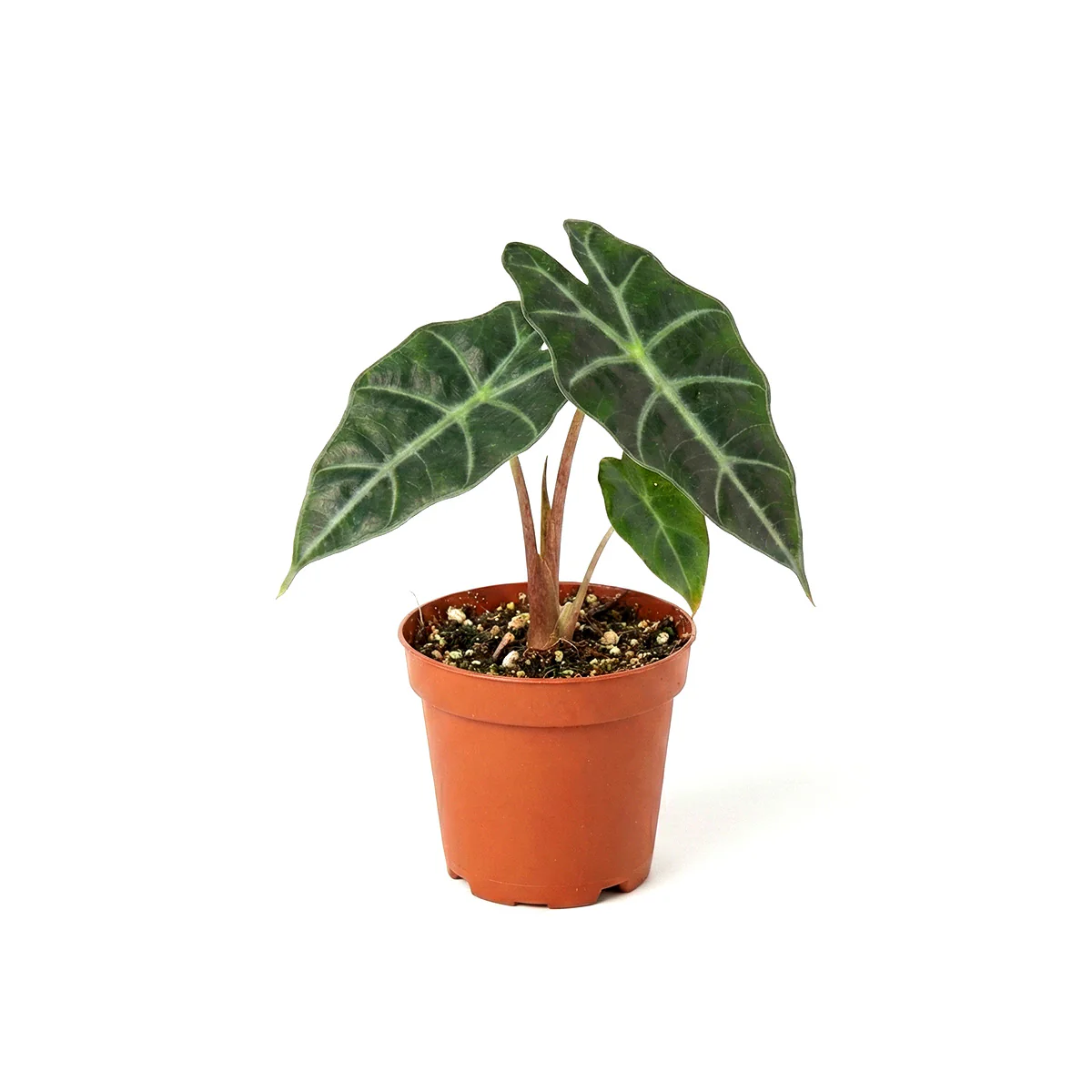
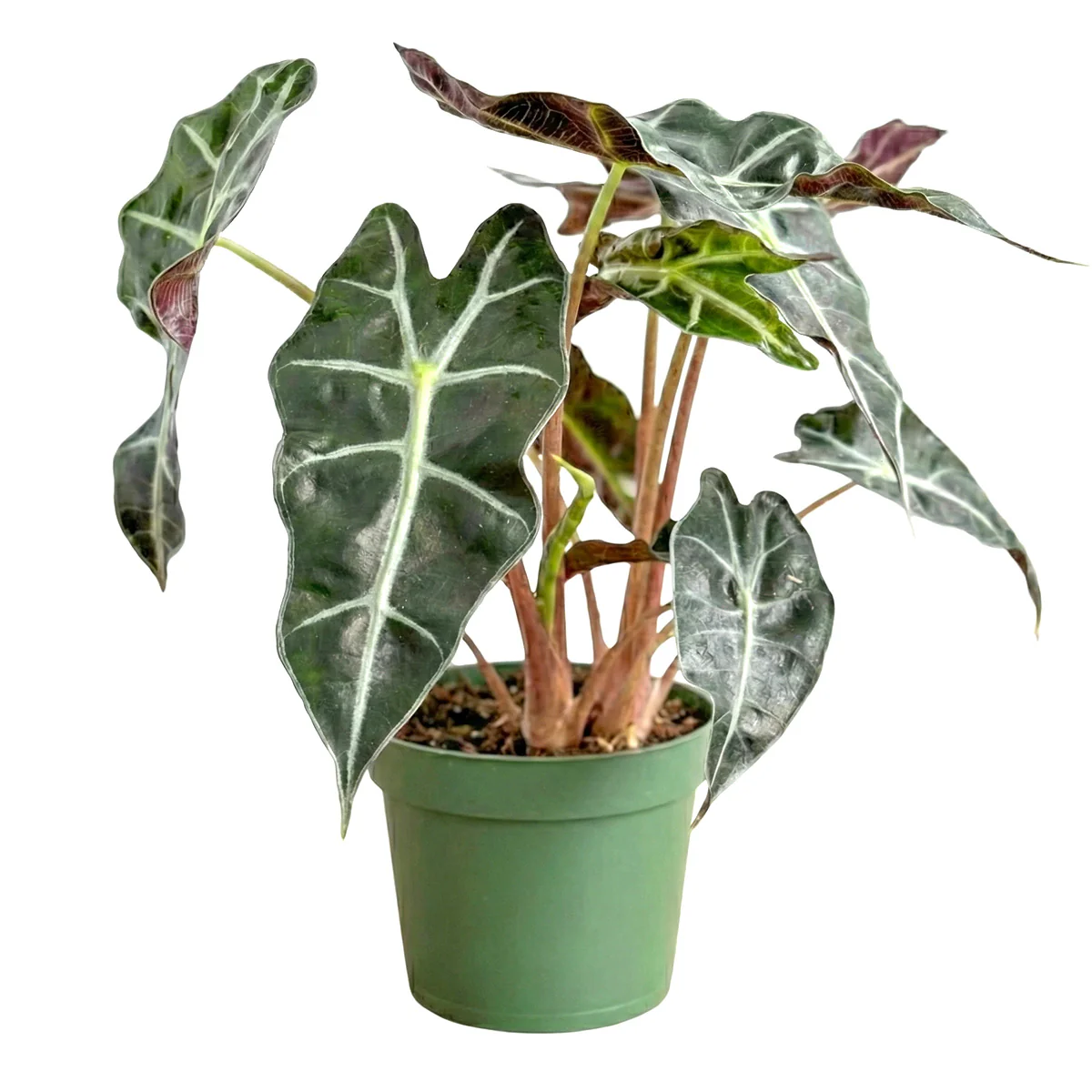
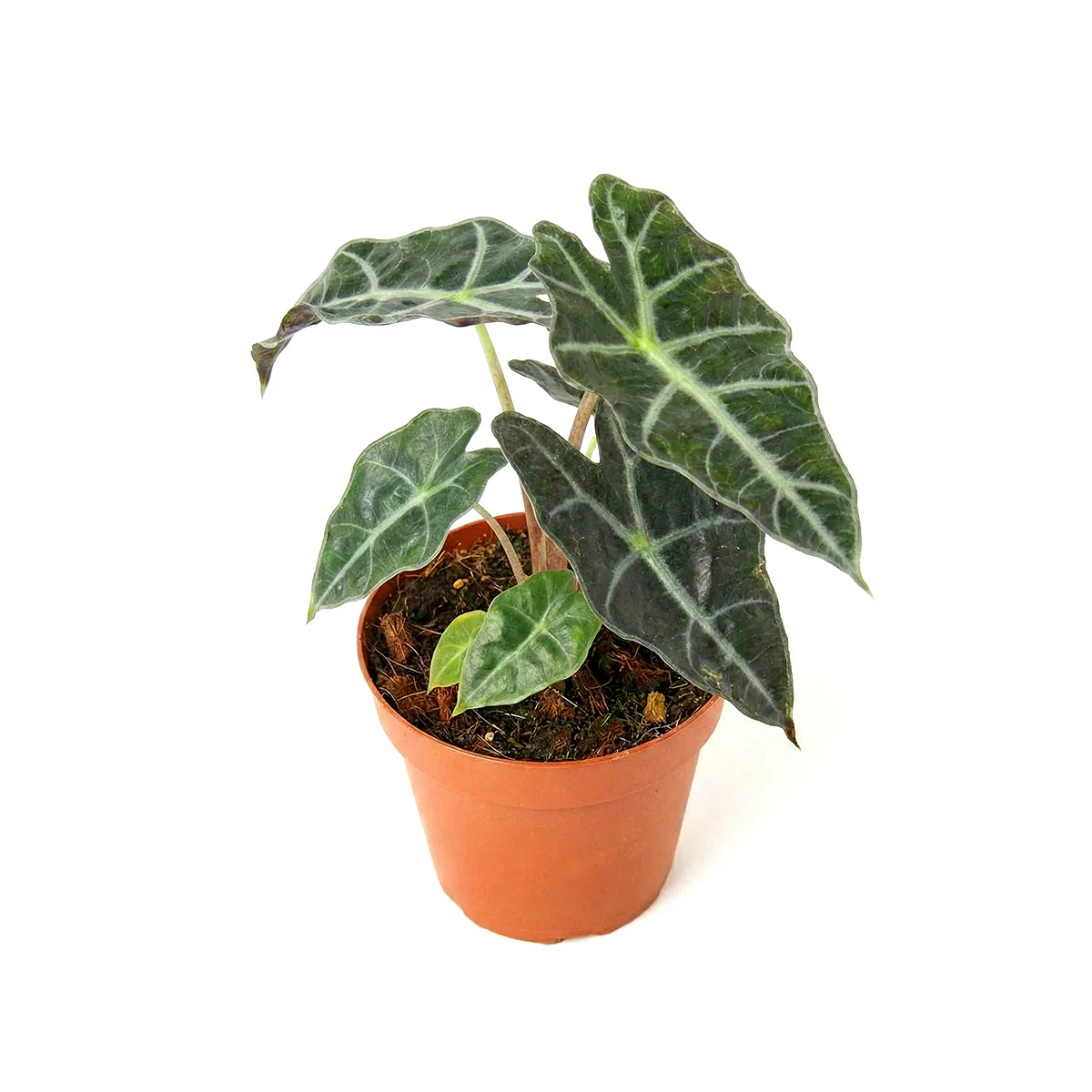
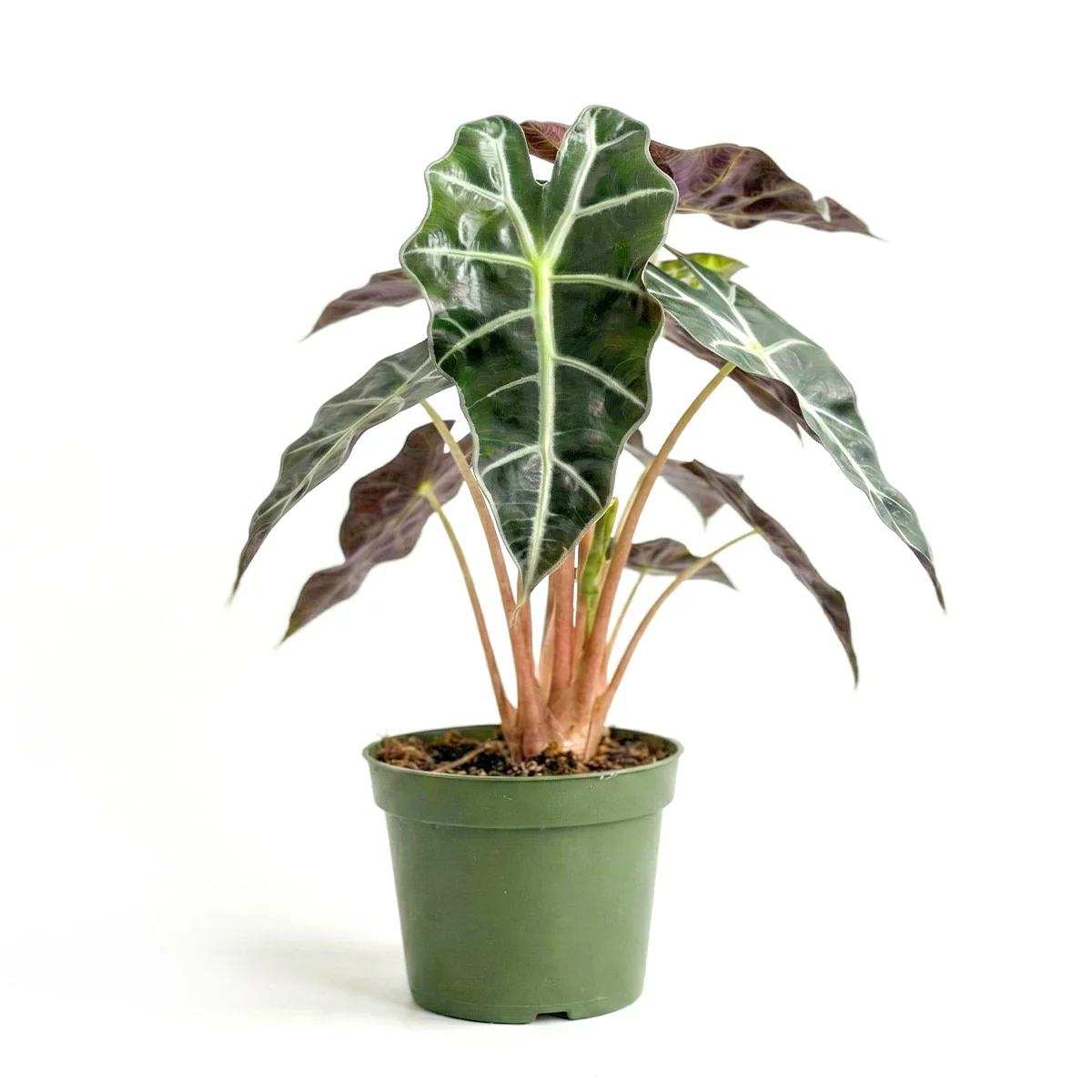
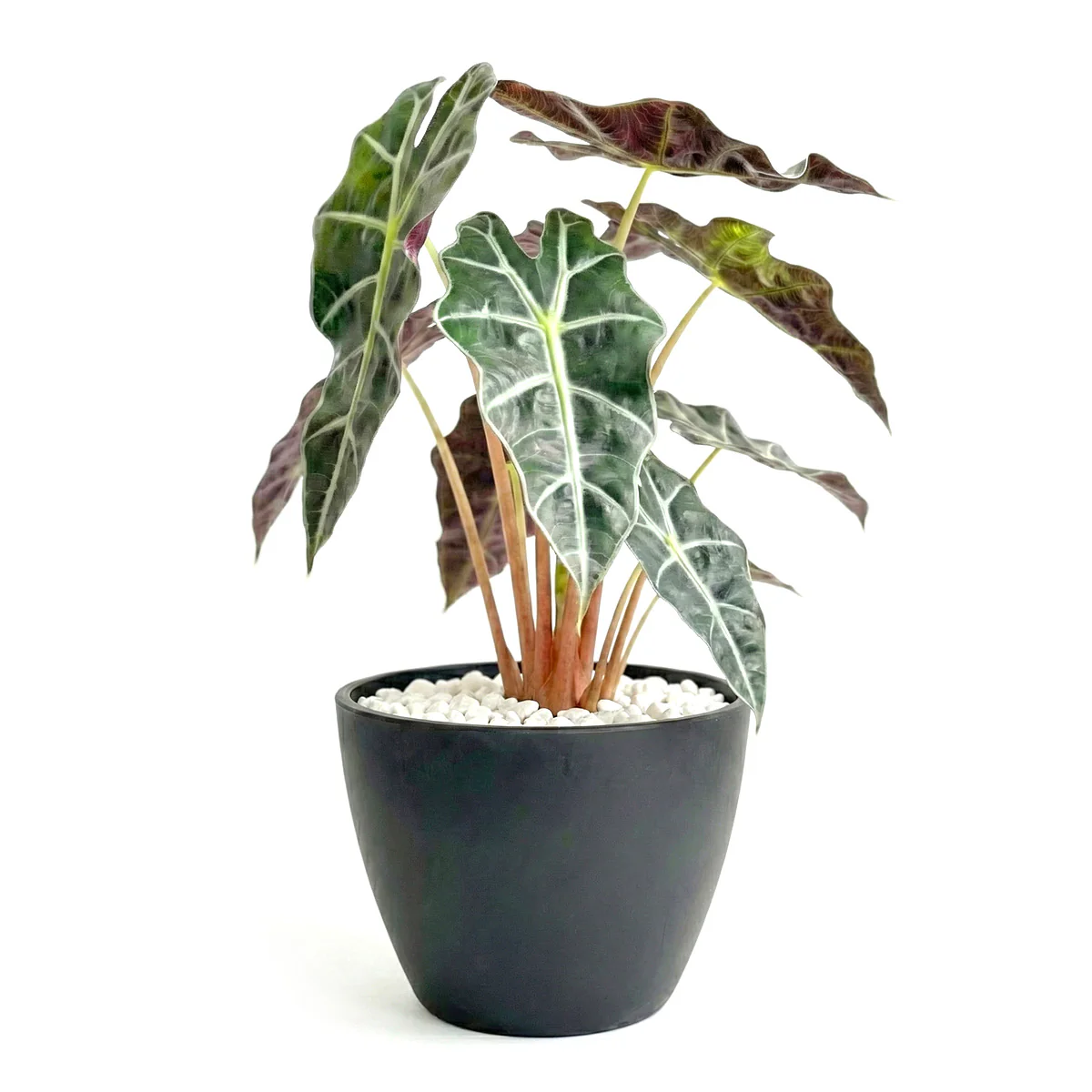
The Alocasia Polly is a hybrid cultivar of Alocasia amazonica, which itself is thought to be a hybrid of Alocasia watsoniana and Alocasia sanderiana. The original Alocasia species are native to tropical and subtropical Asia, including rainforests in Borneo and the Philippines. The Alocasia Polly is not from Africa, and its "African Mask" nickname is a marketing misnomer.![]() The most striking feature of the Alocasia Polly is its foliage. The large, dark green leaves are glossy and have a distinct, almost-metallic sheen. The leaf shape is unique, resembling an arrowhead or a stylized mask, with ruffled or undulating edges. What makes it particularly special are the bold, silvery-white veins that pop against the dark leaf surface, creating a stunning visual contrast. The undersides of the leaves are often a purplish-burgundy color, adding to its dramatic appeal..
The most striking feature of the Alocasia Polly is its foliage. The large, dark green leaves are glossy and have a distinct, almost-metallic sheen. The leaf shape is unique, resembling an arrowhead or a stylized mask, with ruffled or undulating edges. What makes it particularly special are the bold, silvery-white veins that pop against the dark leaf surface, creating a stunning visual contrast. The undersides of the leaves are often a purplish-burgundy color, adding to its dramatic appeal.. ![]() The Alocasia Polly is a moderate to fast-growing plant under ideal conditions. Its growth is often characterized by a "tuber-like" growth pattern, where it will sprout new leaves from the base, and old leaves may die off.
The Alocasia Polly is a moderate to fast-growing plant under ideal conditions. Its growth is often characterized by a "tuber-like" growth pattern, where it will sprout new leaves from the base, and old leaves may die off.
-
![]() The Alocasia Polly requires bright, indirect light to thrive. Too much direct sun can scorch its delicate leaves, while too little light will cause it to become leggy and lose its vibrant coloration.
The Alocasia Polly requires bright, indirect light to thrive. Too much direct sun can scorch its delicate leaves, while too little light will cause it to become leggy and lose its vibrant coloration.![]() Water when the top 2-3 inches of soil are dry to the touch. The plant is sensitive to both overwatering and underwatering. It prefers consistently moist but not soggy soil.
Water when the top 2-3 inches of soil are dry to the touch. The plant is sensitive to both overwatering and underwatering. It prefers consistently moist but not soggy soil.![]() Use a well-draining, airy, and rich potting mix. A blend of potting soil, perlite, and orchid bark is an ideal combination. This type of mix allows for good drainage while retaining enough moisture.
Use a well-draining, airy, and rich potting mix. A blend of potting soil, perlite, and orchid bark is an ideal combination. This type of mix allows for good drainage while retaining enough moisture.![]() The Alocasia Polly thrives in warm temperatures, ideally between 65°F and 80°F (18°C - 27°C).
The Alocasia Polly thrives in warm temperatures, ideally between 65°F and 80°F (18°C - 27°C).
-
![]() USDA Zone 10-12
USDA Zone 10-12USDA Zone 9b: to -3.8 °C (25 °F)
USDA Zone 10a: to -1.1 °C (30 °F)
USDA Zone 10b: to 1.7 °C (35 °F)
USDA Zone 11: above 4.5 °C (40 °F)
 The Alocasia Polly is a hybrid cultivar of Alocasia amazonica, which itself is thought to be a hybrid of Alocasia watsoniana and Alocasia sanderiana. The original Alocasia species are native to tropical and subtropical Asia, including rainforests in Borneo and the Philippines. The Alocasia Polly is not from Africa, and its "African Mask" nickname is a marketing misnomer.
 The most striking feature of the Alocasia Polly is its foliage. The large, dark green leaves are glossy and have a distinct, almost-metallic sheen. The leaf shape is unique, resembling an arrowhead or a stylized mask, with ruffled or undulating edges. What makes it particularly special are the bold, silvery-white veins that pop against the dark leaf surface, creating a stunning visual contrast. The undersides of the leaves are often a purplish-burgundy color, adding to its dramatic appeal..
  The Alocasia Polly is a moderate to fast-growing plant under ideal conditions. Its growth is often characterized by a "tuber-like" growth pattern, where it will sprout new leaves from the base, and old leaves may die off.
 The Alocasia Polly requires bright, indirect light to thrive. Too much direct sun can scorch its delicate leaves, while too little light will cause it to become leggy and lose its vibrant coloration.
 Water when the top 2-3 inches of soil are dry to the touch. The plant is sensitive to both overwatering and underwatering. It prefers consistently moist but not soggy soil.
 Use a well-draining, airy, and rich potting mix. A blend of potting soil, perlite, and orchid bark is an ideal combination. This type of mix allows for good drainage while retaining enough moisture.
 The Alocasia Polly thrives in warm temperatures, ideally between 65°F and 80°F (18°C - 27°C).
 USDA Zone 10-12
Select Size
From $21.99
Alocasia Polly 'African Mask'—
$21.99
Product Information
Product Information
Shipping & Returns
Shipping & Returns
Description
-
![]() The Alocasia Polly is a hybrid cultivar of Alocasia amazonica, which itself is thought to be a hybrid of Alocasia watsoniana and Alocasia sanderiana. The original Alocasia species are native to tropical and subtropical Asia, including rainforests in Borneo and the Philippines. The Alocasia Polly is not from Africa, and its "African Mask" nickname is a marketing misnomer.
The Alocasia Polly is a hybrid cultivar of Alocasia amazonica, which itself is thought to be a hybrid of Alocasia watsoniana and Alocasia sanderiana. The original Alocasia species are native to tropical and subtropical Asia, including rainforests in Borneo and the Philippines. The Alocasia Polly is not from Africa, and its "African Mask" nickname is a marketing misnomer.![]() The most striking feature of the Alocasia Polly is its foliage. The large, dark green leaves are glossy and have a distinct, almost-metallic sheen. The leaf shape is unique, resembling an arrowhead or a stylized mask, with ruffled or undulating edges. What makes it particularly special are the bold, silvery-white veins that pop against the dark leaf surface, creating a stunning visual contrast. The undersides of the leaves are often a purplish-burgundy color, adding to its dramatic appeal..
The most striking feature of the Alocasia Polly is its foliage. The large, dark green leaves are glossy and have a distinct, almost-metallic sheen. The leaf shape is unique, resembling an arrowhead or a stylized mask, with ruffled or undulating edges. What makes it particularly special are the bold, silvery-white veins that pop against the dark leaf surface, creating a stunning visual contrast. The undersides of the leaves are often a purplish-burgundy color, adding to its dramatic appeal.. ![]() The Alocasia Polly is a moderate to fast-growing plant under ideal conditions. Its growth is often characterized by a "tuber-like" growth pattern, where it will sprout new leaves from the base, and old leaves may die off.
The Alocasia Polly is a moderate to fast-growing plant under ideal conditions. Its growth is often characterized by a "tuber-like" growth pattern, where it will sprout new leaves from the base, and old leaves may die off.
-
![]() The Alocasia Polly requires bright, indirect light to thrive. Too much direct sun can scorch its delicate leaves, while too little light will cause it to become leggy and lose its vibrant coloration.
The Alocasia Polly requires bright, indirect light to thrive. Too much direct sun can scorch its delicate leaves, while too little light will cause it to become leggy and lose its vibrant coloration.![]() Water when the top 2-3 inches of soil are dry to the touch. The plant is sensitive to both overwatering and underwatering. It prefers consistently moist but not soggy soil.
Water when the top 2-3 inches of soil are dry to the touch. The plant is sensitive to both overwatering and underwatering. It prefers consistently moist but not soggy soil.![]() Use a well-draining, airy, and rich potting mix. A blend of potting soil, perlite, and orchid bark is an ideal combination. This type of mix allows for good drainage while retaining enough moisture.
Use a well-draining, airy, and rich potting mix. A blend of potting soil, perlite, and orchid bark is an ideal combination. This type of mix allows for good drainage while retaining enough moisture.![]() The Alocasia Polly thrives in warm temperatures, ideally between 65°F and 80°F (18°C - 27°C).
The Alocasia Polly thrives in warm temperatures, ideally between 65°F and 80°F (18°C - 27°C).
-
![]() USDA Zone 10-12
USDA Zone 10-12USDA Zone 9b: to -3.8 °C (25 °F)
USDA Zone 10a: to -1.1 °C (30 °F)
USDA Zone 10b: to 1.7 °C (35 °F)
USDA Zone 11: above 4.5 °C (40 °F)