🚚 Free Worldwide Shipping on All Orders!Shop Now



Sansevieria Trifasciata 'Moonshine'
-
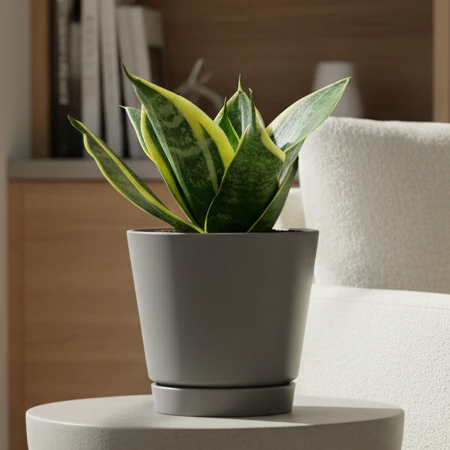
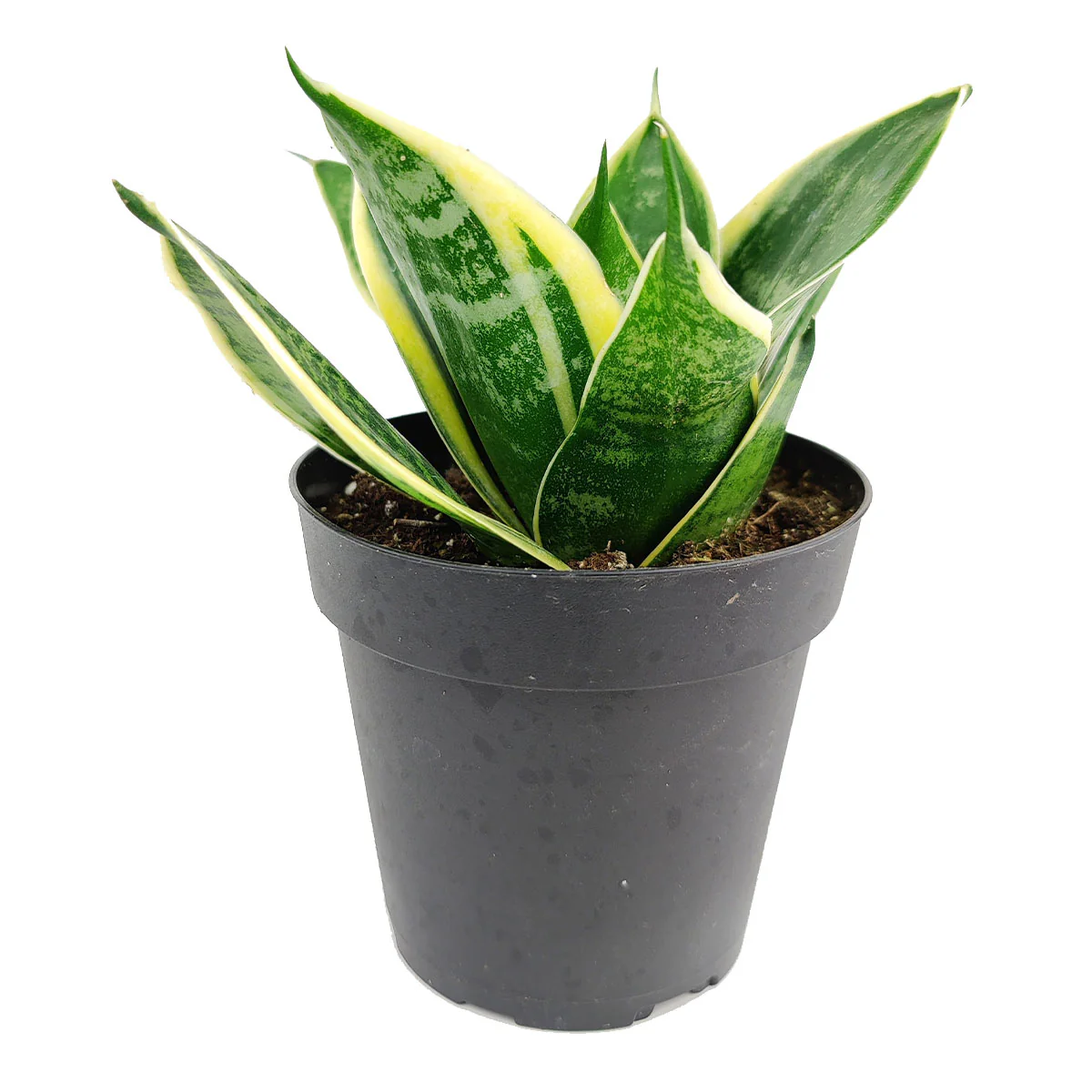
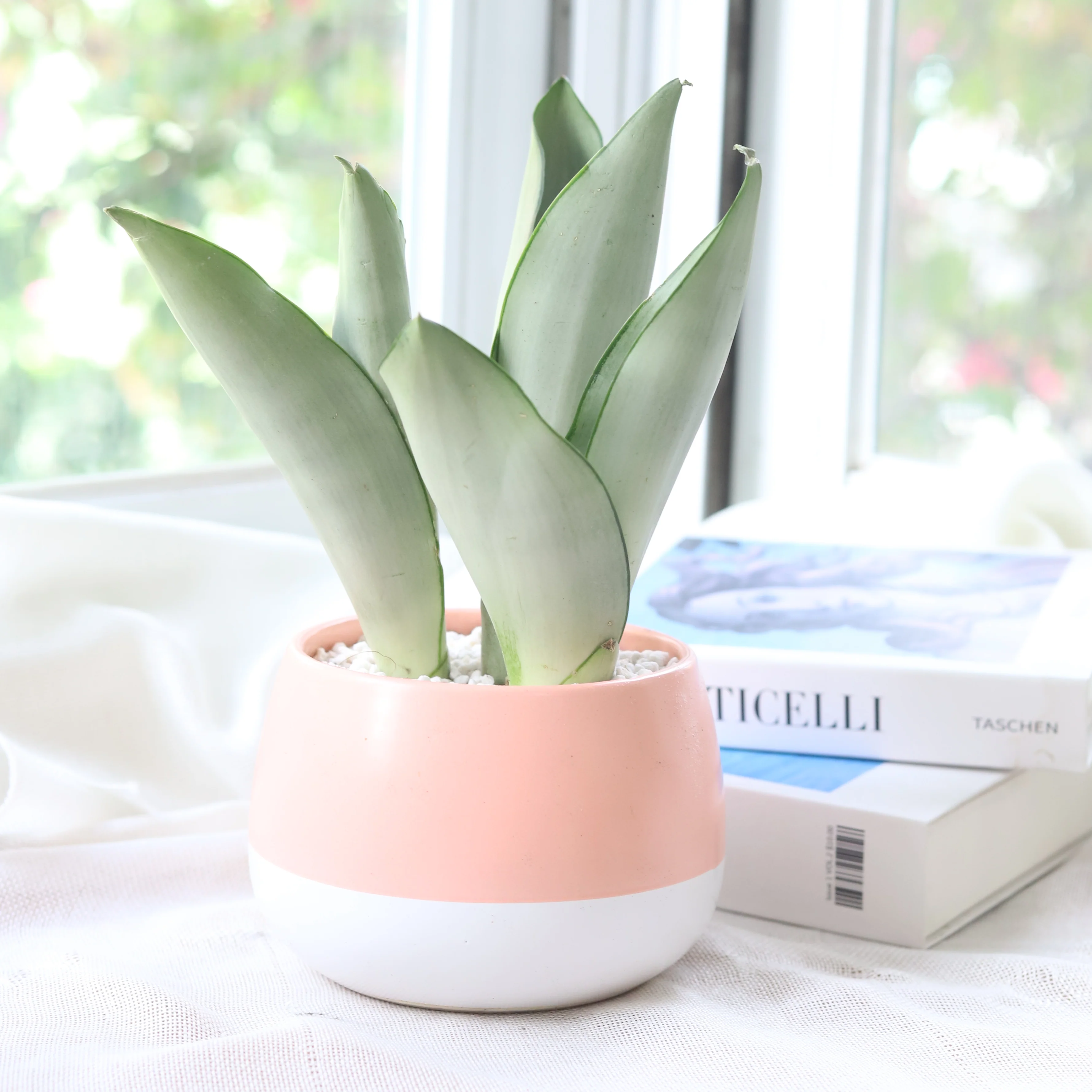
![]() Sansevieria trifasciata 'Moonshine'might or Moonshine Snake Plant is a unique plant in the Sansevieria family and originally comes from West Africa. It stands out with its pale, silvery-green leaves — a softer, cooler look compared to the deep green and yellow variegation most people associate with snake plants.
Sansevieria trifasciata 'Moonshine'might or Moonshine Snake Plant is a unique plant in the Sansevieria family and originally comes from West Africa. It stands out with its pale, silvery-green leaves — a softer, cooler look compared to the deep green and yellow variegation most people associate with snake plants.![]() Each leaf grows upright in a tight, vertical clump, forming a striking rosette shape that gives this plant a clean, modern vibe. The leaves are broad, thick, and smooth, often with darker green edges or very faint striping. In lower light, the silver tones may deepen slightly, giving the plant a more muted, matte appearance — still beautiful, just different. Indoors, Moonshine usually grows to about 12-18 inches tall, and over time, it can spread outward by producing small offsets (or “pups”) at the base.
Each leaf grows upright in a tight, vertical clump, forming a striking rosette shape that gives this plant a clean, modern vibe. The leaves are broad, thick, and smooth, often with darker green edges or very faint striping. In lower light, the silver tones may deepen slightly, giving the plant a more muted, matte appearance — still beautiful, just different. Indoors, Moonshine usually grows to about 12-18 inches tall, and over time, it can spread outward by producing small offsets (or “pups”) at the base.![]() This plant is super tough — drought-tolerant, resistant to most pests, and one of the few houseplants that actually does well in low light. You can stick it in a bright window, an office corner, or even a bathroom with just a bit of natural light, and it’ll carry on just fine. It’s also on NASA’s list of air-purifying plants, with some ability to filter toxins like formaldehyde and benzene — though you’d need a lot of plants to make a big impact, it still contributes to a healthier indoor environment.
This plant is super tough — drought-tolerant, resistant to most pests, and one of the few houseplants that actually does well in low light. You can stick it in a bright window, an office corner, or even a bathroom with just a bit of natural light, and it’ll carry on just fine. It’s also on NASA’s list of air-purifying plants, with some ability to filter toxins like formaldehyde and benzene — though you’d need a lot of plants to make a big impact, it still contributes to a healthier indoor environment.![]() Another bonus? It doesn’t need constant attention. If you forget to water it for a few weeks, it won’t mind. In fact, it’s better to underwater than overwater, since soggy soil can lead to root rot. If you travel a lot, have a busy schedule, or just don’t want to think about your plants too much, Moonshine is the kind of plant that gives you grace.
Another bonus? It doesn’t need constant attention. If you forget to water it for a few weeks, it won’t mind. In fact, it’s better to underwater than overwater, since soggy soil can lead to root rot. If you travel a lot, have a busy schedule, or just don’t want to think about your plants too much, Moonshine is the kind of plant that gives you grace.
-
![]() Adaptable to most light levels. It thrives in bright, indirect light, but unlike many plants, it can also handle low light or fluorescent lighting — just expect slower growth and darker leaf color in dimmer spots.
Adaptable to most light levels. It thrives in bright, indirect light, but unlike many plants, it can also handle low light or fluorescent lighting — just expect slower growth and darker leaf color in dimmer spots.![]() Let the soil dry out completely between waterings. A good rule of thumb is to water every 2 to 4 weeks, depending on season and humidity. In winter, even less is fine.
Let the soil dry out completely between waterings. A good rule of thumb is to water every 2 to 4 weeks, depending on season and humidity. In winter, even less is fine.![]() Use a well-draining soil mix — something meant for cacti or succulents works great. Fertilize once a month during spring and summer using a mild, balanced liquid fertilizer. Skip feeding in winter.
Use a well-draining soil mix — something meant for cacti or succulents works great. Fertilize once a month during spring and summer using a mild, balanced liquid fertilizer. Skip feeding in winter. ![]() Happy in average indoor temperatures between 60–85°F. It can tolerate dry air but also handles humidity well, making it suitable for most rooms, including bathrooms.
Happy in average indoor temperatures between 60–85°F. It can tolerate dry air but also handles humidity well, making it suitable for most rooms, including bathrooms.
![]() Like other snake plants, Moonshine is considered mildly toxic to pets and humans if eaten. It’s best to keep it out of reach of curious pets or small children.
Like other snake plants, Moonshine is considered mildly toxic to pets and humans if eaten. It’s best to keep it out of reach of curious pets or small children.
-
![]() USDA Zone 10-12
USDA Zone 10-12USDA Zone 9b: to -3.8 °C (25 °F)
USDA Zone 10a: to -1.1 °C (30 °F)
USDA Zone 10b: to 1.7 °C (35 °F)
USDA Zone 11: above 4.5 °C (40 °F)
 Sansevieria trifasciata 'Moonshine'might or Moonshine Snake Plant is a unique plant in the Sansevieria family and originally comes from West Africa. It stands out with its pale, silvery-green leaves — a softer, cooler look compared to the deep green and yellow variegation most people associate with snake plants.
 Each leaf grows upright in a tight, vertical clump, forming a striking rosette shape that gives this plant a clean, modern vibe. The leaves are broad, thick, and smooth, often with darker green edges or very faint striping. In lower light, the silver tones may deepen slightly, giving the plant a more muted, matte appearance — still beautiful, just different. Indoors, Moonshine usually grows to about 12-18 inches tall, and over time, it can spread outward by producing small offsets (or “pups”) at the base.
 This plant is super tough — drought-tolerant, resistant to most pests, and one of the few houseplants that actually does well in low light. You can stick it in a bright window, an office corner, or even a bathroom with just a bit of natural light, and it’ll carry on just fine. It’s also on NASA’s list of air-purifying plants, with some ability to filter toxins like formaldehyde and benzene — though you’d need a lot of plants to make a big impact, it still contributes to a healthier indoor environment.
 Adaptable to most light levels. It thrives in bright, indirect light, but unlike many plants, it can also handle low light or fluorescent lighting — just expect slower growth and darker leaf color in dimmer spots.
 Let the soil dry out completely between waterings. A good rule of thumb is to water every 2 to 4 weeks, depending on season and humidity. In winter, even less is fine.
 Use a well-draining soil mix — something meant for cacti or succulents works great. Fertilize once a month during spring and summer using a mild, balanced liquid fertilizer. Skip feeding in winter.
  Happy in average indoor temperatures between 60–85°F. It can tolerate dry air but also handles humidity well, making it suitable for most rooms, including bathrooms.
 Like other snake plants, Moonshine is considered mildly toxic to pets and humans if eaten. It’s best to keep it out of reach of curious pets or small children.
 USDA Zone 10-12
Select Size
From $24.00
Sansevieria Trifasciata 'Moonshine'—
$24.00
Product Information
Product Information
Shipping & Returns
Shipping & Returns
Description
-
![]() Sansevieria trifasciata 'Moonshine'might or Moonshine Snake Plant is a unique plant in the Sansevieria family and originally comes from West Africa. It stands out with its pale, silvery-green leaves — a softer, cooler look compared to the deep green and yellow variegation most people associate with snake plants.
Sansevieria trifasciata 'Moonshine'might or Moonshine Snake Plant is a unique plant in the Sansevieria family and originally comes from West Africa. It stands out with its pale, silvery-green leaves — a softer, cooler look compared to the deep green and yellow variegation most people associate with snake plants.![]() Each leaf grows upright in a tight, vertical clump, forming a striking rosette shape that gives this plant a clean, modern vibe. The leaves are broad, thick, and smooth, often with darker green edges or very faint striping. In lower light, the silver tones may deepen slightly, giving the plant a more muted, matte appearance — still beautiful, just different. Indoors, Moonshine usually grows to about 12-18 inches tall, and over time, it can spread outward by producing small offsets (or “pups”) at the base.
Each leaf grows upright in a tight, vertical clump, forming a striking rosette shape that gives this plant a clean, modern vibe. The leaves are broad, thick, and smooth, often with darker green edges or very faint striping. In lower light, the silver tones may deepen slightly, giving the plant a more muted, matte appearance — still beautiful, just different. Indoors, Moonshine usually grows to about 12-18 inches tall, and over time, it can spread outward by producing small offsets (or “pups”) at the base.![]() This plant is super tough — drought-tolerant, resistant to most pests, and one of the few houseplants that actually does well in low light. You can stick it in a bright window, an office corner, or even a bathroom with just a bit of natural light, and it’ll carry on just fine. It’s also on NASA’s list of air-purifying plants, with some ability to filter toxins like formaldehyde and benzene — though you’d need a lot of plants to make a big impact, it still contributes to a healthier indoor environment.
This plant is super tough — drought-tolerant, resistant to most pests, and one of the few houseplants that actually does well in low light. You can stick it in a bright window, an office corner, or even a bathroom with just a bit of natural light, and it’ll carry on just fine. It’s also on NASA’s list of air-purifying plants, with some ability to filter toxins like formaldehyde and benzene — though you’d need a lot of plants to make a big impact, it still contributes to a healthier indoor environment.![]() Another bonus? It doesn’t need constant attention. If you forget to water it for a few weeks, it won’t mind. In fact, it’s better to underwater than overwater, since soggy soil can lead to root rot. If you travel a lot, have a busy schedule, or just don’t want to think about your plants too much, Moonshine is the kind of plant that gives you grace.
Another bonus? It doesn’t need constant attention. If you forget to water it for a few weeks, it won’t mind. In fact, it’s better to underwater than overwater, since soggy soil can lead to root rot. If you travel a lot, have a busy schedule, or just don’t want to think about your plants too much, Moonshine is the kind of plant that gives you grace.
-
![]() Adaptable to most light levels. It thrives in bright, indirect light, but unlike many plants, it can also handle low light or fluorescent lighting — just expect slower growth and darker leaf color in dimmer spots.
Adaptable to most light levels. It thrives in bright, indirect light, but unlike many plants, it can also handle low light or fluorescent lighting — just expect slower growth and darker leaf color in dimmer spots.![]() Let the soil dry out completely between waterings. A good rule of thumb is to water every 2 to 4 weeks, depending on season and humidity. In winter, even less is fine.
Let the soil dry out completely between waterings. A good rule of thumb is to water every 2 to 4 weeks, depending on season and humidity. In winter, even less is fine.![]() Use a well-draining soil mix — something meant for cacti or succulents works great. Fertilize once a month during spring and summer using a mild, balanced liquid fertilizer. Skip feeding in winter.
Use a well-draining soil mix — something meant for cacti or succulents works great. Fertilize once a month during spring and summer using a mild, balanced liquid fertilizer. Skip feeding in winter. ![]() Happy in average indoor temperatures between 60–85°F. It can tolerate dry air but also handles humidity well, making it suitable for most rooms, including bathrooms.
Happy in average indoor temperatures between 60–85°F. It can tolerate dry air but also handles humidity well, making it suitable for most rooms, including bathrooms.
![]() Like other snake plants, Moonshine is considered mildly toxic to pets and humans if eaten. It’s best to keep it out of reach of curious pets or small children.
Like other snake plants, Moonshine is considered mildly toxic to pets and humans if eaten. It’s best to keep it out of reach of curious pets or small children.
-
![]() USDA Zone 10-12
USDA Zone 10-12USDA Zone 9b: to -3.8 °C (25 °F)
USDA Zone 10a: to -1.1 °C (30 °F)
USDA Zone 10b: to 1.7 °C (35 °F)
USDA Zone 11: above 4.5 °C (40 °F)