🚚 Free Worldwide Shipping on All Orders!Shop Now



Ficus Elastica 'Tineke'
-
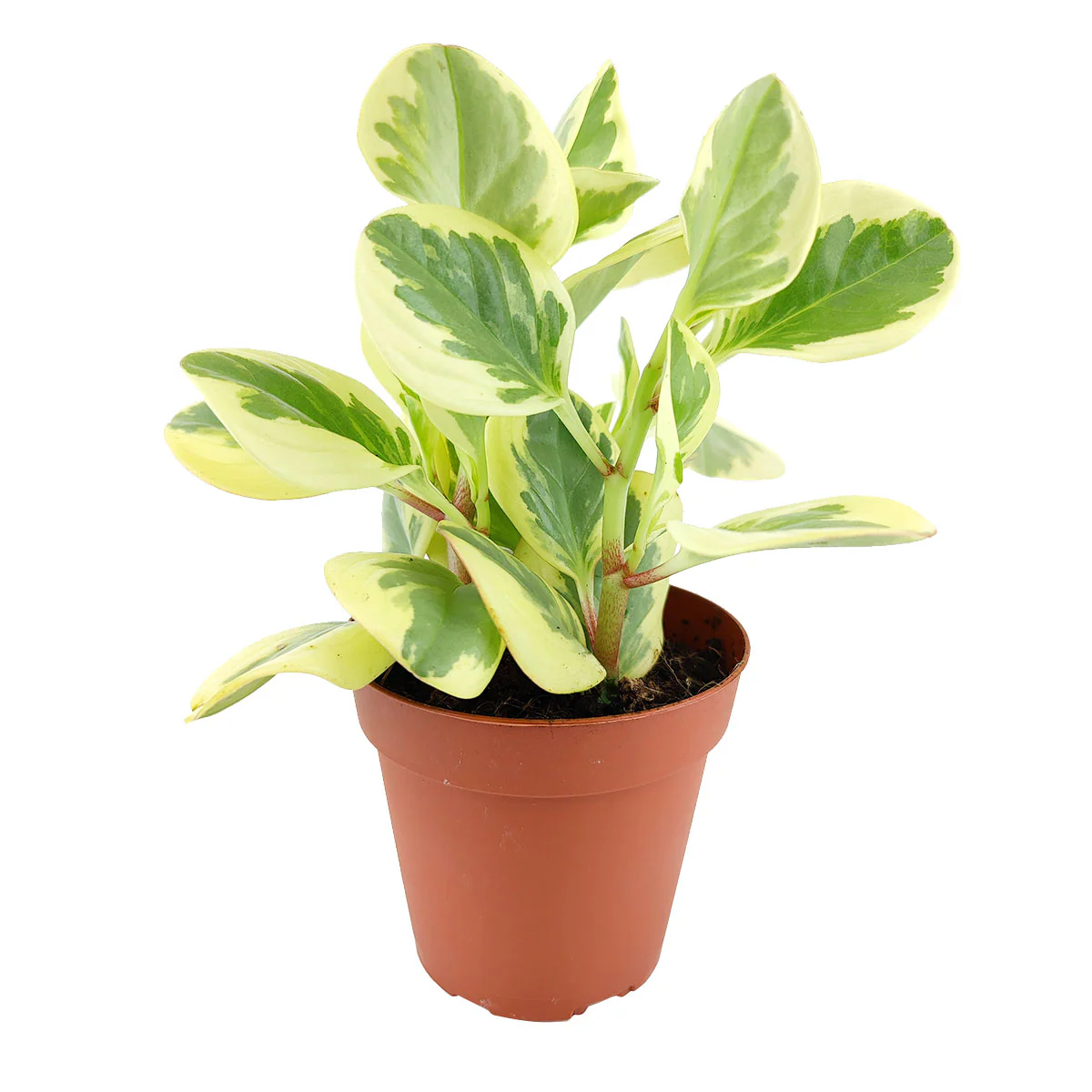
![]() The 'Tineke' is a vibrant, evergreen plant known for its striking green, yellow/cream, and white variegation. Its thick, glossy, oval-shaped leaves often feature a delicate pink or reddish hue along the edges or new growth points, making it a spectacular tricolor specimen. It is a slightly hardier variety compared to some other variegated Ficus plants.
The 'Tineke' is a vibrant, evergreen plant known for its striking green, yellow/cream, and white variegation. Its thick, glossy, oval-shaped leaves often feature a delicate pink or reddish hue along the edges or new growth points, making it a spectacular tricolor specimen. It is a slightly hardier variety compared to some other variegated Ficus plants.![]() The parent species, Ficus elastica, is native to the tropical and subtropical regions of India and Malaysia.
The parent species, Ficus elastica, is native to the tropical and subtropical regions of India and Malaysia.![]() It develops into an impressive, upright, tree-like form indoors, making it an excellent statement plant for living areas or offices.
It develops into an impressive, upright, tree-like form indoors, making it an excellent statement plant for living areas or offices.![]() Like other Ficus, it produces small, insignificant flowers enclosed within a fig-like structure, but these are rarely produced on indoor specimens and are not considered ornamental.
Like other Ficus, it produces small, insignificant flowers enclosed within a fig-like structure, but these are rarely produced on indoor specimens and are not considered ornamental.
-
![]() Bright, Indirect Light is Crucial. To maintain the vibrant variegation (especially the white and cream parts), place it in a very bright spot. This plant requires more light than the dark 'Burgundy' variety. Avoid direct, intense afternoon sun, which can scorch the leaves, and avoid low light, which will dull the colors.
Bright, Indirect Light is Crucial. To maintain the vibrant variegation (especially the white and cream parts), place it in a very bright spot. This plant requires more light than the dark 'Burgundy' variety. Avoid direct, intense afternoon sun, which can scorch the leaves, and avoid low light, which will dull the colors.![]() Keep soil consistently moist but never soggy. Allow the top inch of soil to dry out slightly before watering. Overwatering is the biggest killer; reduce frequency significantly during winter dormancy.
Keep soil consistently moist but never soggy. Allow the top inch of soil to dry out slightly before watering. Overwatering is the biggest killer; reduce frequency significantly during winter dormancy.![]() Use a rich, well-draining, slightly acidic potting mix. A standard houseplant mix amended with perlite or orchid bark for better aeration works well.
Use a rich, well-draining, slightly acidic potting mix. A standard houseplant mix amended with perlite or orchid bark for better aeration works well.![]() Prefers stable, warm temperatures between 60°F and 75°F (16°C–24°C). It is sensitive to cold and should be protected from temperatures below 55°F (13°C) and cold drafts.
Prefers stable, warm temperatures between 60°F and 75°F (16°C–24°C). It is sensitive to cold and should be protected from temperatures below 55°F (13°C) and cold drafts.![]() This plant should be fertilized once per month during the growing season (spring/summer) with diluted houseplant fertilizer.
This plant should be fertilized once per month during the growing season (spring/summer) with diluted houseplant fertilizer.
-
![]() Typically Zones 10-12. Best suited for year-round indoor environments in most regions.
Typically Zones 10-12. Best suited for year-round indoor environments in most regions.

 The parent species, Ficus elastica, is native to the tropical and subtropical regions of India and Malaysia.
 Like other Ficus, it produces small, insignificant flowers enclosed within a fig-like structure, but these are rarely produced on indoor specimens and are not considered ornamental.
 Bright, Indirect Light is Crucial. To maintain the vibrant variegation (especially the white and cream parts), place it in a very bright spot. This plant requires more light than the dark 'Burgundy' variety. Avoid direct, intense afternoon sun, which can scorch the leaves, and avoid low light, which will dull the colors.
 Keep soil consistently moist but never soggy. Allow the top inch of soil to dry out slightly before watering. Overwatering is the biggest killer; reduce frequency significantly during winter dormancy.
 Use a rich, well-draining, slightly acidic potting mix. A standard houseplant mix amended with perlite or orchid bark for better aeration works well.
 Prefers stable, warm temperatures between 60°F and 75°F (16°C–24°C). It is sensitive to cold and should be protected from temperatures below 55°F (13°C) and cold drafts.
 This plant should be fertilized once per month during the growing season (spring/summer) with diluted houseplant fertilizer.
 Typically Zones 10-12. Best suited for year-round indoor environments in most regions.
Select Size
From $6.30
Original: $20.99
-70%Ficus Elastica 'Tineke'—
$20.99
$6.30Product Information
Product Information
Shipping & Returns
Shipping & Returns
Description
-
![]() The 'Tineke' is a vibrant, evergreen plant known for its striking green, yellow/cream, and white variegation. Its thick, glossy, oval-shaped leaves often feature a delicate pink or reddish hue along the edges or new growth points, making it a spectacular tricolor specimen. It is a slightly hardier variety compared to some other variegated Ficus plants.
The 'Tineke' is a vibrant, evergreen plant known for its striking green, yellow/cream, and white variegation. Its thick, glossy, oval-shaped leaves often feature a delicate pink or reddish hue along the edges or new growth points, making it a spectacular tricolor specimen. It is a slightly hardier variety compared to some other variegated Ficus plants.![]() The parent species, Ficus elastica, is native to the tropical and subtropical regions of India and Malaysia.
The parent species, Ficus elastica, is native to the tropical and subtropical regions of India and Malaysia.![]() It develops into an impressive, upright, tree-like form indoors, making it an excellent statement plant for living areas or offices.
It develops into an impressive, upright, tree-like form indoors, making it an excellent statement plant for living areas or offices.![]() Like other Ficus, it produces small, insignificant flowers enclosed within a fig-like structure, but these are rarely produced on indoor specimens and are not considered ornamental.
Like other Ficus, it produces small, insignificant flowers enclosed within a fig-like structure, but these are rarely produced on indoor specimens and are not considered ornamental.
-
![]() Bright, Indirect Light is Crucial. To maintain the vibrant variegation (especially the white and cream parts), place it in a very bright spot. This plant requires more light than the dark 'Burgundy' variety. Avoid direct, intense afternoon sun, which can scorch the leaves, and avoid low light, which will dull the colors.
Bright, Indirect Light is Crucial. To maintain the vibrant variegation (especially the white and cream parts), place it in a very bright spot. This plant requires more light than the dark 'Burgundy' variety. Avoid direct, intense afternoon sun, which can scorch the leaves, and avoid low light, which will dull the colors.![]() Keep soil consistently moist but never soggy. Allow the top inch of soil to dry out slightly before watering. Overwatering is the biggest killer; reduce frequency significantly during winter dormancy.
Keep soil consistently moist but never soggy. Allow the top inch of soil to dry out slightly before watering. Overwatering is the biggest killer; reduce frequency significantly during winter dormancy.![]() Use a rich, well-draining, slightly acidic potting mix. A standard houseplant mix amended with perlite or orchid bark for better aeration works well.
Use a rich, well-draining, slightly acidic potting mix. A standard houseplant mix amended with perlite or orchid bark for better aeration works well.![]() Prefers stable, warm temperatures between 60°F and 75°F (16°C–24°C). It is sensitive to cold and should be protected from temperatures below 55°F (13°C) and cold drafts.
Prefers stable, warm temperatures between 60°F and 75°F (16°C–24°C). It is sensitive to cold and should be protected from temperatures below 55°F (13°C) and cold drafts.![]() This plant should be fertilized once per month during the growing season (spring/summer) with diluted houseplant fertilizer.
This plant should be fertilized once per month during the growing season (spring/summer) with diluted houseplant fertilizer.
-
![]() Typically Zones 10-12. Best suited for year-round indoor environments in most regions.
Typically Zones 10-12. Best suited for year-round indoor environments in most regions.