🚚 Free Worldwide Shipping on All Orders!Shop Now



Ficus Altissima 'Yellow Gem'
-
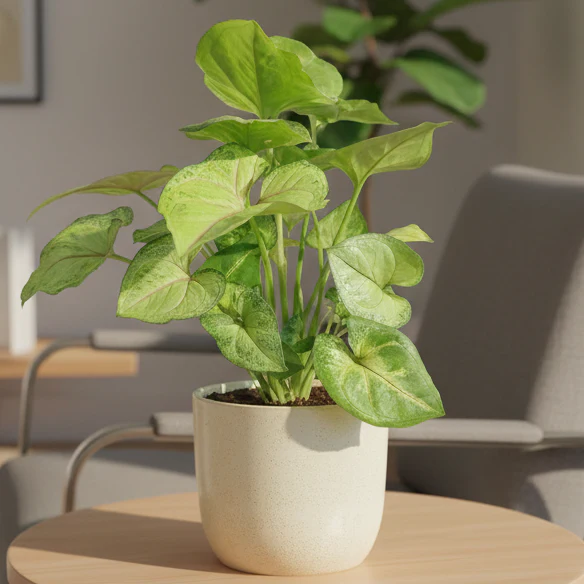
![]() This variety of Fig is characterized by its thick, rubbery leaves which display a beautiful, glossy texture. The base of the leaves is a bright green, highlighted by an attractive yellow-green blotchy border and prominent yellow veins. This "lemon and lime" contrast becomes deeper and more defined with optimal light exposure over time.
This variety of Fig is characterized by its thick, rubbery leaves which display a beautiful, glossy texture. The base of the leaves is a bright green, highlighted by an attractive yellow-green blotchy border and prominent yellow veins. This "lemon and lime" contrast becomes deeper and more defined with optimal light exposure over time.![]() The parent species, Ficus altissima, is native to Southeast Asia, particularly parts of India, China, Malaysia, and Indochina.
The parent species, Ficus altissima, is native to Southeast Asia, particularly parts of India, China, Malaysia, and Indochina.![]() This plant effectively removes common airborne toxins and is among the most popular air-purifying houseplants.
This plant effectively removes common airborne toxins and is among the most popular air-purifying houseplants.![]() Like other Ficus species, it produces minute flowers enclosed within small, inconspicuous, fig-like structures called synconia. These are rarely produced or observed indoors and have no ornamental value.
Like other Ficus species, it produces minute flowers enclosed within small, inconspicuous, fig-like structures called synconia. These are rarely produced or observed indoors and have no ornamental value.
-
![]() Bright, Indirect Light is Ideal. To maintain the vibrant yellow variegation, place it near a bright window. Direct sun can scorch the leaves, but insufficient light will cause the plant to lose its vibrant color and become more green.
Bright, Indirect Light is Ideal. To maintain the vibrant yellow variegation, place it near a bright window. Direct sun can scorch the leaves, but insufficient light will cause the plant to lose its vibrant color and become more green.![]() Allow the top 1-2 inches of soil to dry out between waterings. Water thoroughly until it drains from the bottom. Avoid overwatering, which can lead to root rot.
Allow the top 1-2 inches of soil to dry out between waterings. Water thoroughly until it drains from the bottom. Avoid overwatering, which can lead to root rot.![]() Use a well-draining potting mix that retains some moisture. A mix designed for indoor trees or general houseplants with added perlite works well.
Use a well-draining potting mix that retains some moisture. A mix designed for indoor trees or general houseplants with added perlite works well.![]() Prefers warm temperatures, ideally between 65°F and 80°F (18°C–27°C). Protect from cold drafts, air conditioning vents, and sudden temperature drops below 55°F (13°C).
Prefers warm temperatures, ideally between 65°F and 80°F (18°C–27°C). Protect from cold drafts, air conditioning vents, and sudden temperature drops below 55°F (13°C).![]() This plant should be fertilized once per month during the growing season (spring/summer) with diluted houseplant fertilizer.
This plant should be fertilized once per month during the growing season (spring/summer) with diluted houseplant fertilizer.
-
![]() Typically Zones 9-11. Usually grown as a large houseplant or container plant in cooler climates.
Typically Zones 9-11. Usually grown as a large houseplant or container plant in cooler climates.

 The parent species, Ficus altissima, is native to Southeast Asia, particularly parts of India, China, Malaysia, and Indochina.
 Bright, Indirect Light is Ideal. To maintain the vibrant yellow variegation, place it near a bright window. Direct sun can scorch the leaves, but insufficient light will cause the plant to lose its vibrant color and become more green.
 Allow the top 1-2 inches of soil to dry out between waterings. Water thoroughly until it drains from the bottom. Avoid overwatering, which can lead to root rot.
 Use a well-draining potting mix that retains some moisture. A mix designed for indoor trees or general houseplants with added perlite works well.
 Prefers warm temperatures, ideally between 65°F and 80°F (18°C–27°C). Protect from cold drafts, air conditioning vents, and sudden temperature drops below 55°F (13°C).
 This plant should be fertilized once per month during the growing season (spring/summer) with diluted houseplant fertilizer.
 Typically Zones 9-11. Usually grown as a large houseplant or container plant in cooler climates.
Select Size
From $10.20
Original: $33.99
-70%Ficus Altissima 'Yellow Gem'—
$33.99
$10.20Product Information
Product Information
Shipping & Returns
Shipping & Returns
Description
-
![]() This variety of Fig is characterized by its thick, rubbery leaves which display a beautiful, glossy texture. The base of the leaves is a bright green, highlighted by an attractive yellow-green blotchy border and prominent yellow veins. This "lemon and lime" contrast becomes deeper and more defined with optimal light exposure over time.
This variety of Fig is characterized by its thick, rubbery leaves which display a beautiful, glossy texture. The base of the leaves is a bright green, highlighted by an attractive yellow-green blotchy border and prominent yellow veins. This "lemon and lime" contrast becomes deeper and more defined with optimal light exposure over time.![]() The parent species, Ficus altissima, is native to Southeast Asia, particularly parts of India, China, Malaysia, and Indochina.
The parent species, Ficus altissima, is native to Southeast Asia, particularly parts of India, China, Malaysia, and Indochina.![]() This plant effectively removes common airborne toxins and is among the most popular air-purifying houseplants.
This plant effectively removes common airborne toxins and is among the most popular air-purifying houseplants.![]() Like other Ficus species, it produces minute flowers enclosed within small, inconspicuous, fig-like structures called synconia. These are rarely produced or observed indoors and have no ornamental value.
Like other Ficus species, it produces minute flowers enclosed within small, inconspicuous, fig-like structures called synconia. These are rarely produced or observed indoors and have no ornamental value.
-
![]() Bright, Indirect Light is Ideal. To maintain the vibrant yellow variegation, place it near a bright window. Direct sun can scorch the leaves, but insufficient light will cause the plant to lose its vibrant color and become more green.
Bright, Indirect Light is Ideal. To maintain the vibrant yellow variegation, place it near a bright window. Direct sun can scorch the leaves, but insufficient light will cause the plant to lose its vibrant color and become more green.![]() Allow the top 1-2 inches of soil to dry out between waterings. Water thoroughly until it drains from the bottom. Avoid overwatering, which can lead to root rot.
Allow the top 1-2 inches of soil to dry out between waterings. Water thoroughly until it drains from the bottom. Avoid overwatering, which can lead to root rot.![]() Use a well-draining potting mix that retains some moisture. A mix designed for indoor trees or general houseplants with added perlite works well.
Use a well-draining potting mix that retains some moisture. A mix designed for indoor trees or general houseplants with added perlite works well.![]() Prefers warm temperatures, ideally between 65°F and 80°F (18°C–27°C). Protect from cold drafts, air conditioning vents, and sudden temperature drops below 55°F (13°C).
Prefers warm temperatures, ideally between 65°F and 80°F (18°C–27°C). Protect from cold drafts, air conditioning vents, and sudden temperature drops below 55°F (13°C).![]() This plant should be fertilized once per month during the growing season (spring/summer) with diluted houseplant fertilizer.
This plant should be fertilized once per month during the growing season (spring/summer) with diluted houseplant fertilizer.
-
![]() Typically Zones 9-11. Usually grown as a large houseplant or container plant in cooler climates.
Typically Zones 9-11. Usually grown as a large houseplant or container plant in cooler climates.