🚚 Free Worldwide Shipping on All Orders!Shop Now



Fern 'Elephant'
-
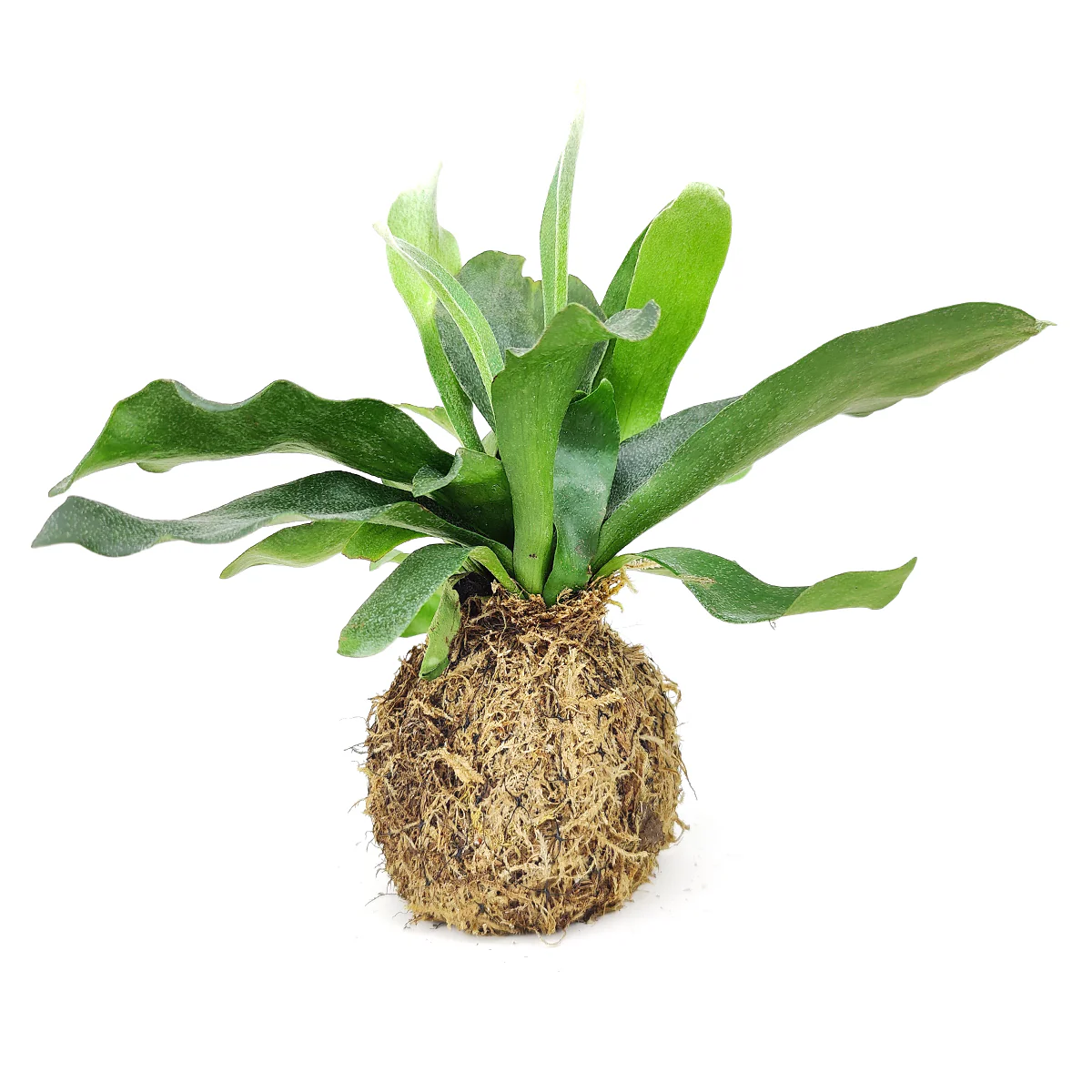
![]() The special quality of the Platycerium elephantotis is its striking, sculptural form and rarity. The broad, velvety, elephant-ear-shaped fertile fronds are a distinctive departure from other Staghorn ferns, making it an exceptional, living piece of botanical art perfect for mounting and displaying vertically on a wall.
The special quality of the Platycerium elephantotis is its striking, sculptural form and rarity. The broad, velvety, elephant-ear-shaped fertile fronds are a distinctive departure from other Staghorn ferns, making it an exceptional, living piece of botanical art perfect for mounting and displaying vertically on a wall.![]() Platycerium elephantotis is native to the tropical forests of Central Africa, where it naturally grows as an epiphyte, meaning it attaches itself to trees or rocks rather than growing in the soil.
Platycerium elephantotis is native to the tropical forests of Central Africa, where it naturally grows as an epiphyte, meaning it attaches itself to trees or rocks rather than growing in the soil.![]() As a true fern, the 'Elephant Ear' Staghorn does not produce flowers. Ferns reproduce via spores, which are typically produced in large patches on the underside of the fertile, ear-shaped fronds when the plant is mature.
As a true fern, the 'Elephant Ear' Staghorn does not produce flowers. Ferns reproduce via spores, which are typically produced in large patches on the underside of the fertile, ear-shaped fronds when the plant is mature.
![]() This plant is very easy-care and versatile, adapting to even low-light rooms. It is a perfect houseplant for beginners and people with busy lifestyles. Moreover, it is a pet-friendly, non-toxic green friend that is recommended for households with pets.
This plant is very easy-care and versatile, adapting to even low-light rooms. It is a perfect houseplant for beginners and people with busy lifestyles. Moreover, it is a pet-friendly, non-toxic green friend that is recommended for households with pets.
-
![]() Partial Sun to Bright, Indirect Light. Morning sun or filtered light is ideal. Avoid harsh, direct afternoon sun, which can burn the fronds.
Partial Sun to Bright, Indirect Light. Morning sun or filtered light is ideal. Avoid harsh, direct afternoon sun, which can burn the fronds.![]() Keep Evenly Moist. When mounted, soak the entire root ball/moss in water for 10-20 minutes when the moss feels mostly dry. Allow the shield fronds to dry out between waterings. Requires high humidity.
Keep Evenly Moist. When mounted, soak the entire root ball/moss in water for 10-20 minutes when the moss feels mostly dry. Allow the shield fronds to dry out between waterings. Requires high humidity.![]() Epiphytic Medium. Since it does not grow in soil, it is best mounted on a board or grown in a basket with a well-draining, chunky medium like sphagnum moss, coco coir, or orchid bark mix.
Epiphytic Medium. Since it does not grow in soil, it is best mounted on a board or grown in a basket with a well-draining, chunky medium like sphagnum moss, coco coir, or orchid bark mix.
![]() 65°F to 80°F (18°C to 27°C). Protect from temperatures below 55°F (13°C).
65°F to 80°F (18°C to 27°C). Protect from temperatures below 55°F (13°C).![]() During the growing season, which typically spans from spring to early autumn, apply a balanced, liquid fertilizer every 4 weeks. Dilute the fertilizer to half to avoid over-fertilization, which can harm the plant. Be cautious not to let the fertilizer come into contact with the foliage, as this can lead to leaf burn.
During the growing season, which typically spans from spring to early autumn, apply a balanced, liquid fertilizer every 4 weeks. Dilute the fertilizer to half to avoid over-fertilization, which can harm the plant. Be cautious not to let the fertilizer come into contact with the foliage, as this can lead to leaf burn.
![]() Like most true ferns, Platycerium elephantotis is generally considered non-toxic to both cats and dogs, making it a safe choice for pet-friendly homes.
Like most true ferns, Platycerium elephantotis is generally considered non-toxic to both cats and dogs, making it a safe choice for pet-friendly homes.
-
![]() 10-12 (Best grown as an indoor houseplant; can be kept outdoors only in warm, sheltered tropical regions).
10-12 (Best grown as an indoor houseplant; can be kept outdoors only in warm, sheltered tropical regions).
 The special quality of the Platycerium elephantotis is its striking, sculptural form and rarity.
 As a true fern, the 'Elephant Ear' Staghorn does not produce flowers.
  Partial Sun to Bright, Indirect Light. Morning sun or filtered light is ideal. Avoid harsh, direct afternoon sun, which can burn the fronds.
 Keep Evenly Moist. When mounted, soak the entire root ball/moss in water for 10-20 minutes when the moss feels mostly dry. Allow the shield fronds to dry out between waterings. Requires high humidity.
 Epiphytic Medium. Since it does not grow in soil, it is best mounted on a board or grown in a basket with a well-draining, chunky medium like sphagnum moss, coco coir, or orchid bark mix.
 65°F to 80°F (18°C to 27°C). Protect from temperatures below 55°F (13°C).
 During the growing season, which typically spans from spring to early autumn, apply a balanced, liquid fertilizer every 4 weeks. Dilute the fertilizer to half to avoid over-fertilization, which can harm the plant. Be cautious not to let the fertilizer come into contact with the foliage, as this can lead to leaf burn.
 10-12 (Best grown as an indoor houseplant; can be kept outdoors only in warm, sheltered tropical regions).
Select Title
From $7.20
Original: $23.99
-70%Fern 'Elephant'—
$23.99
$7.20Product Information
Product Information
Shipping & Returns
Shipping & Returns
Description
-
![]() The special quality of the Platycerium elephantotis is its striking, sculptural form and rarity. The broad, velvety, elephant-ear-shaped fertile fronds are a distinctive departure from other Staghorn ferns, making it an exceptional, living piece of botanical art perfect for mounting and displaying vertically on a wall.
The special quality of the Platycerium elephantotis is its striking, sculptural form and rarity. The broad, velvety, elephant-ear-shaped fertile fronds are a distinctive departure from other Staghorn ferns, making it an exceptional, living piece of botanical art perfect for mounting and displaying vertically on a wall.![]() Platycerium elephantotis is native to the tropical forests of Central Africa, where it naturally grows as an epiphyte, meaning it attaches itself to trees or rocks rather than growing in the soil.
Platycerium elephantotis is native to the tropical forests of Central Africa, where it naturally grows as an epiphyte, meaning it attaches itself to trees or rocks rather than growing in the soil.![]() As a true fern, the 'Elephant Ear' Staghorn does not produce flowers. Ferns reproduce via spores, which are typically produced in large patches on the underside of the fertile, ear-shaped fronds when the plant is mature.
As a true fern, the 'Elephant Ear' Staghorn does not produce flowers. Ferns reproduce via spores, which are typically produced in large patches on the underside of the fertile, ear-shaped fronds when the plant is mature.
![]() This plant is very easy-care and versatile, adapting to even low-light rooms. It is a perfect houseplant for beginners and people with busy lifestyles. Moreover, it is a pet-friendly, non-toxic green friend that is recommended for households with pets.
This plant is very easy-care and versatile, adapting to even low-light rooms. It is a perfect houseplant for beginners and people with busy lifestyles. Moreover, it is a pet-friendly, non-toxic green friend that is recommended for households with pets.
-
![]() Partial Sun to Bright, Indirect Light. Morning sun or filtered light is ideal. Avoid harsh, direct afternoon sun, which can burn the fronds.
Partial Sun to Bright, Indirect Light. Morning sun or filtered light is ideal. Avoid harsh, direct afternoon sun, which can burn the fronds.![]() Keep Evenly Moist. When mounted, soak the entire root ball/moss in water for 10-20 minutes when the moss feels mostly dry. Allow the shield fronds to dry out between waterings. Requires high humidity.
Keep Evenly Moist. When mounted, soak the entire root ball/moss in water for 10-20 minutes when the moss feels mostly dry. Allow the shield fronds to dry out between waterings. Requires high humidity.![]() Epiphytic Medium. Since it does not grow in soil, it is best mounted on a board or grown in a basket with a well-draining, chunky medium like sphagnum moss, coco coir, or orchid bark mix.
Epiphytic Medium. Since it does not grow in soil, it is best mounted on a board or grown in a basket with a well-draining, chunky medium like sphagnum moss, coco coir, or orchid bark mix.
![]() 65°F to 80°F (18°C to 27°C). Protect from temperatures below 55°F (13°C).
65°F to 80°F (18°C to 27°C). Protect from temperatures below 55°F (13°C).![]() During the growing season, which typically spans from spring to early autumn, apply a balanced, liquid fertilizer every 4 weeks. Dilute the fertilizer to half to avoid over-fertilization, which can harm the plant. Be cautious not to let the fertilizer come into contact with the foliage, as this can lead to leaf burn.
During the growing season, which typically spans from spring to early autumn, apply a balanced, liquid fertilizer every 4 weeks. Dilute the fertilizer to half to avoid over-fertilization, which can harm the plant. Be cautious not to let the fertilizer come into contact with the foliage, as this can lead to leaf burn.
![]() Like most true ferns, Platycerium elephantotis is generally considered non-toxic to both cats and dogs, making it a safe choice for pet-friendly homes.
Like most true ferns, Platycerium elephantotis is generally considered non-toxic to both cats and dogs, making it a safe choice for pet-friendly homes.
-
![]() 10-12 (Best grown as an indoor houseplant; can be kept outdoors only in warm, sheltered tropical regions).
10-12 (Best grown as an indoor houseplant; can be kept outdoors only in warm, sheltered tropical regions).