🚚 Free Worldwide Shipping on All Orders!Shop Now



Cotyledon Papillaris Choco Line
-
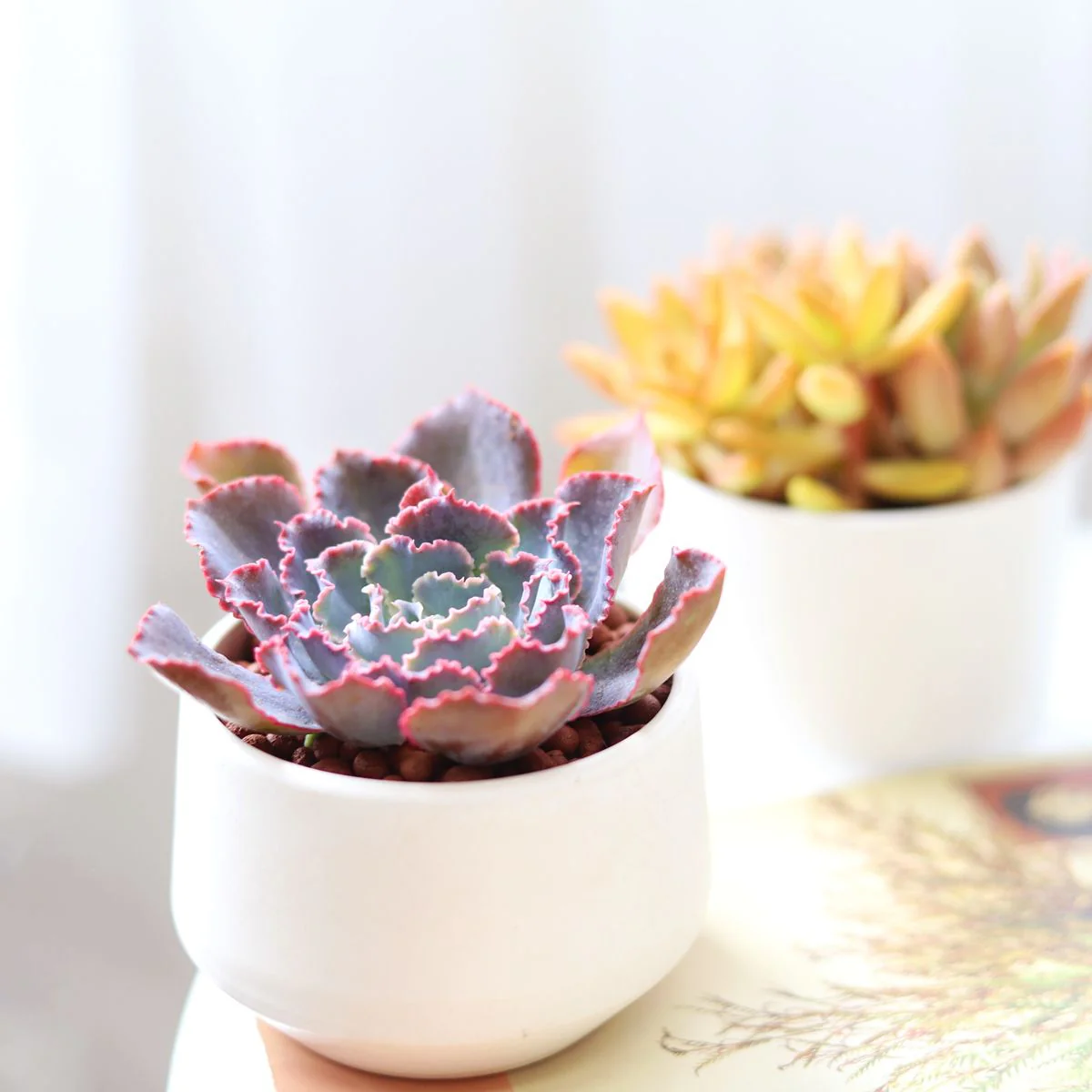
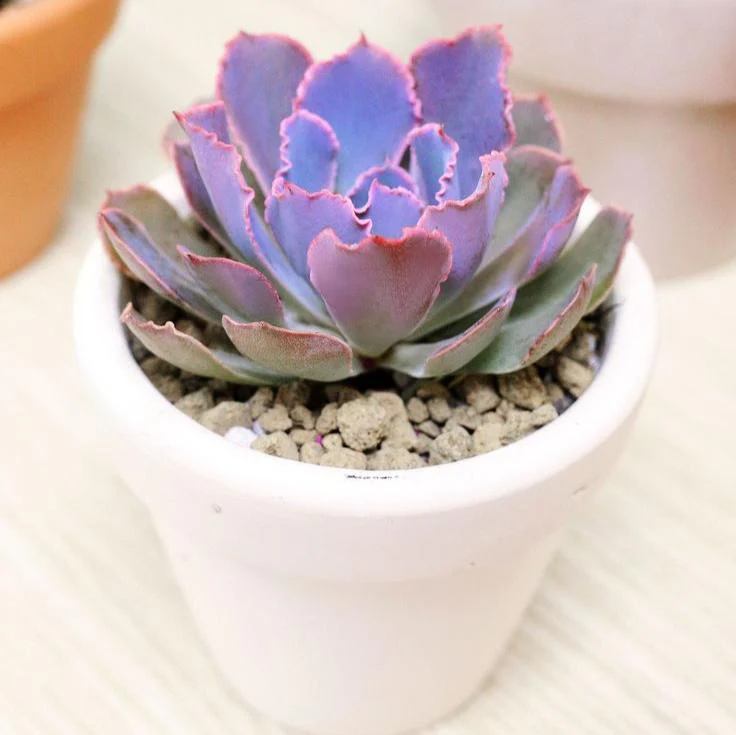
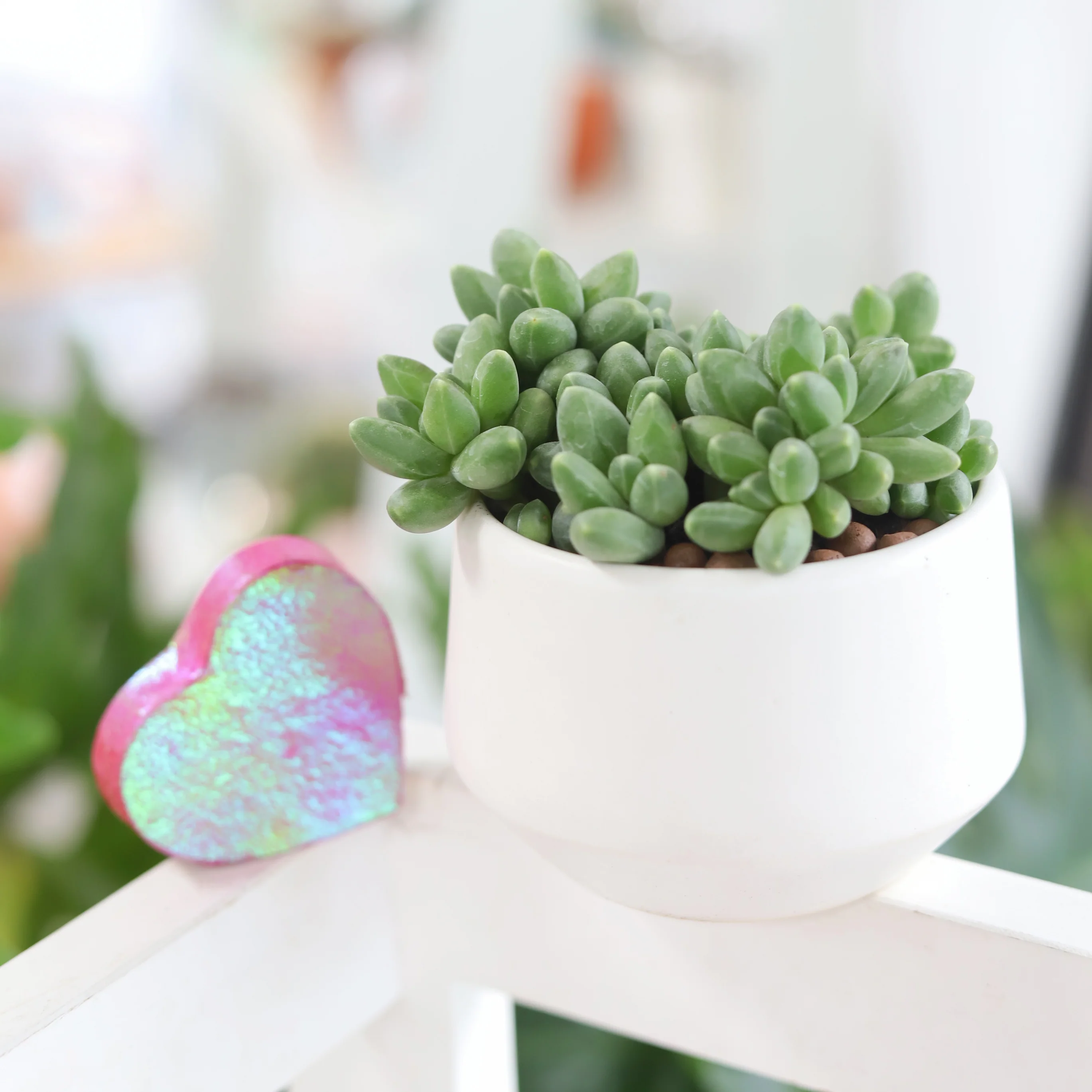
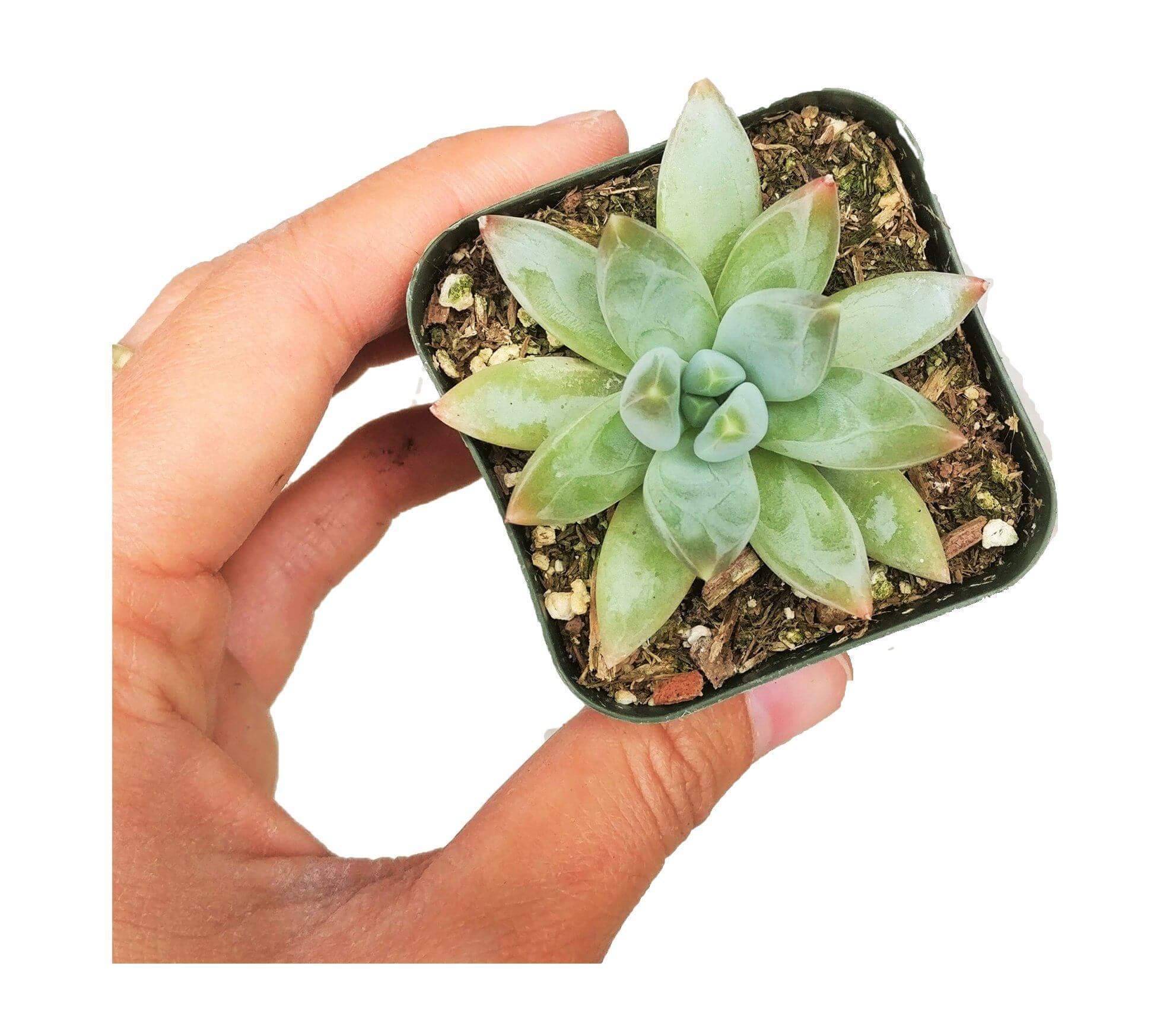
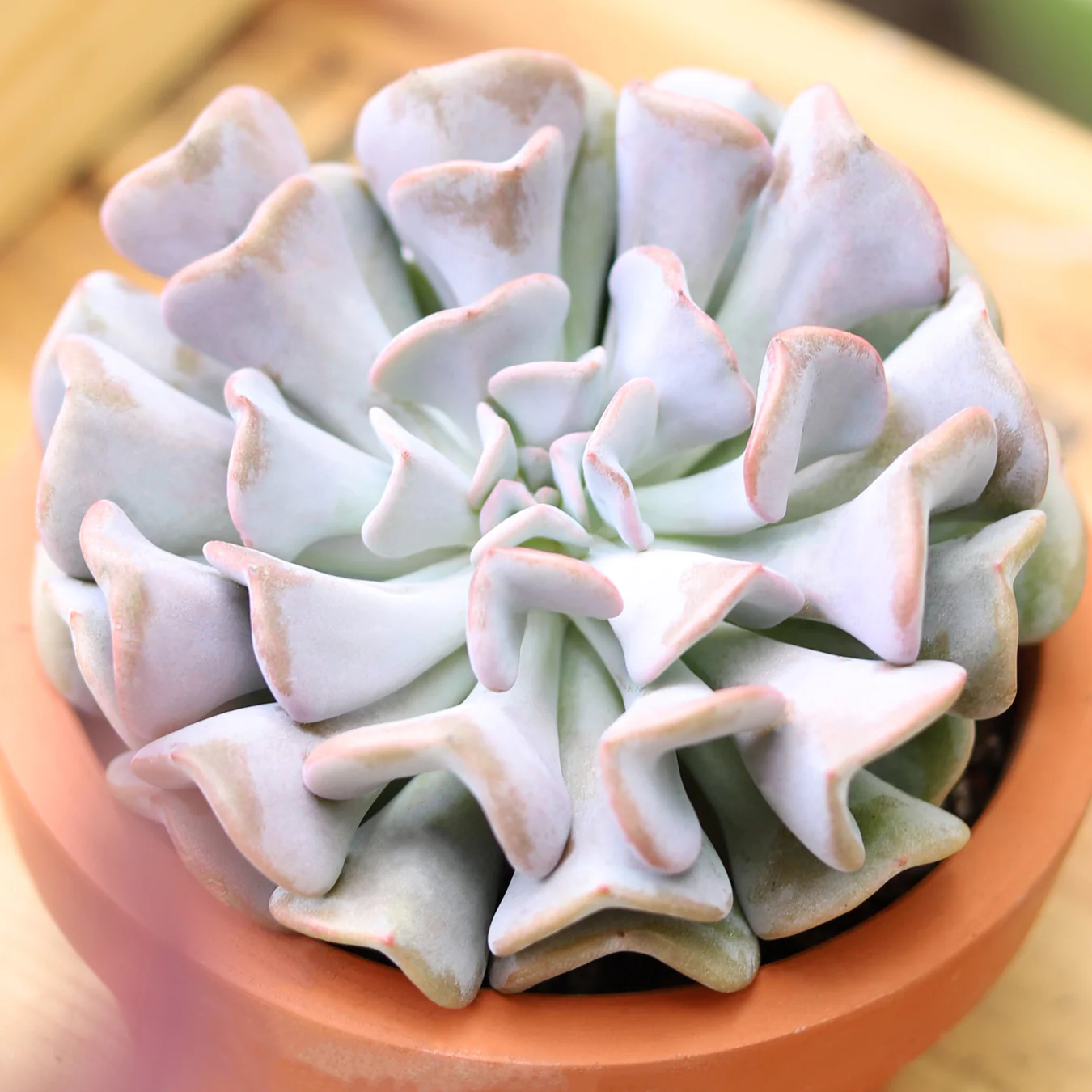
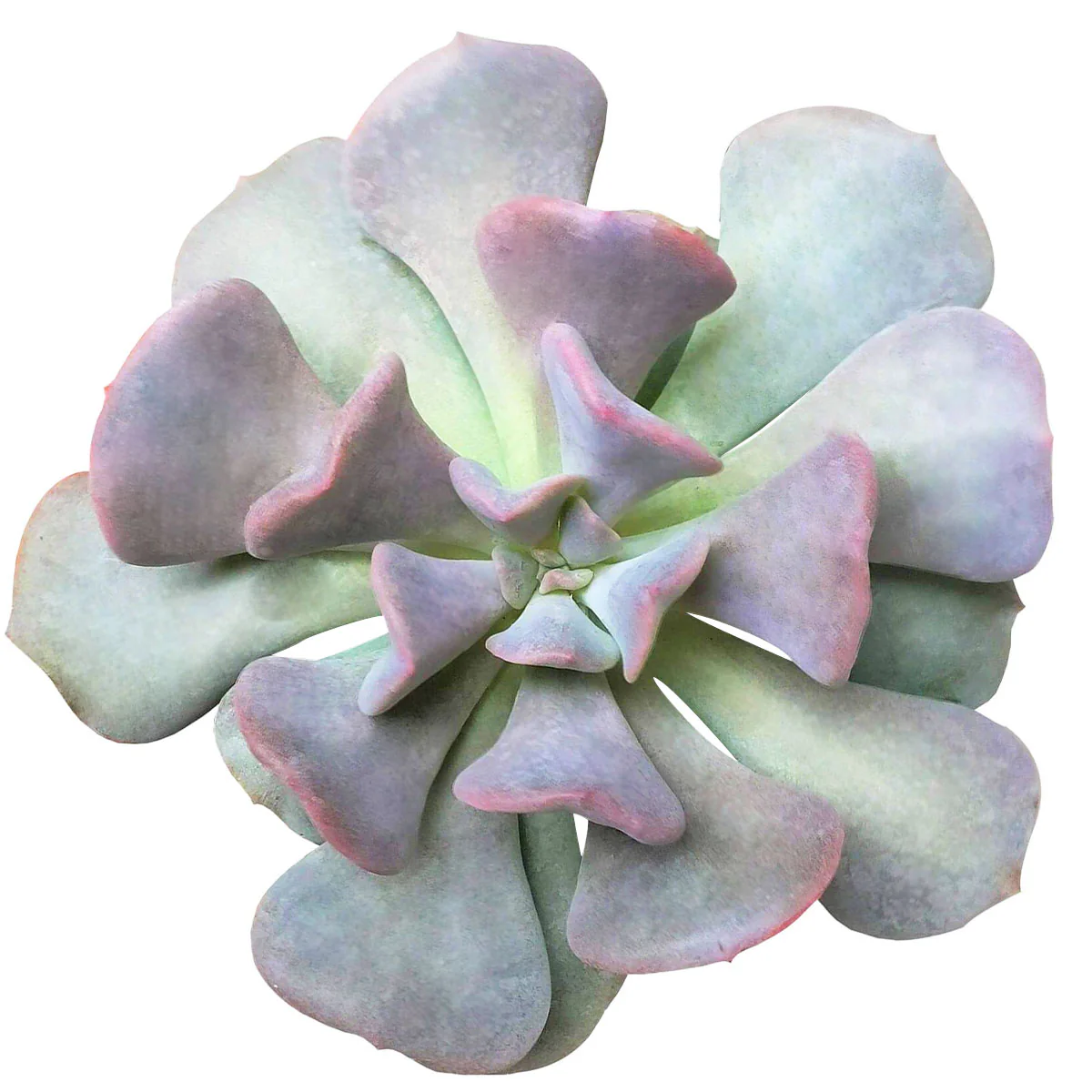
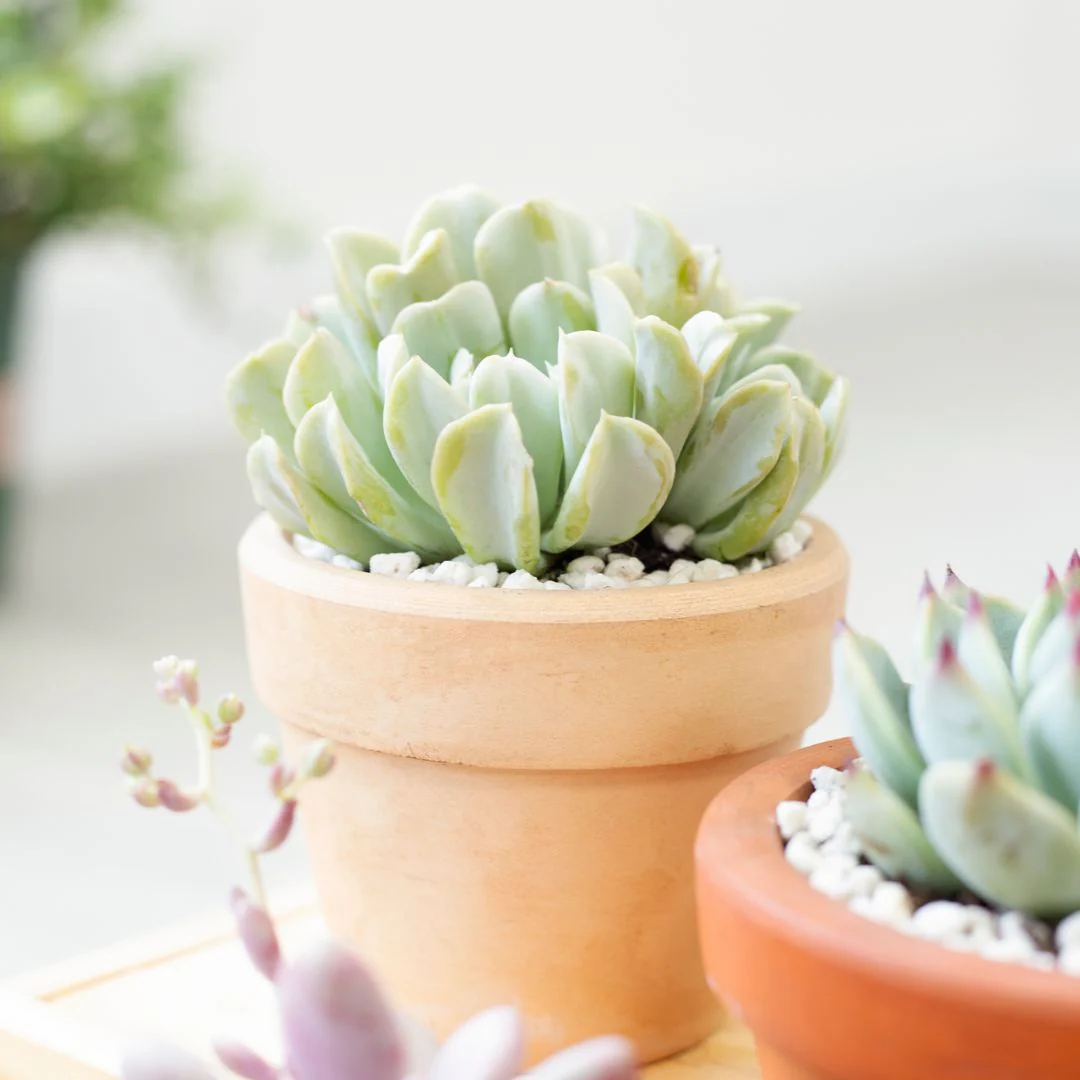
![]() Cotyledon 'Papillaris Choco Line' is a distinctive succulent with unusual leaf texture and muted, earthy colors. A hybrid member of the Crassulaceae family, it likely shares ancestry with species native to South Africa, where Cotyledons evolved to thrive in dry, rocky environments. 'Choco Line' forms a compact, low-growing shape with thick, fleshy leaves covered in a soft layer of fine hairs, giving the plant a velvety feel. Its subtle beauty makes it a good choice for small containers, rock gardens, and detailed succulent arrangements.
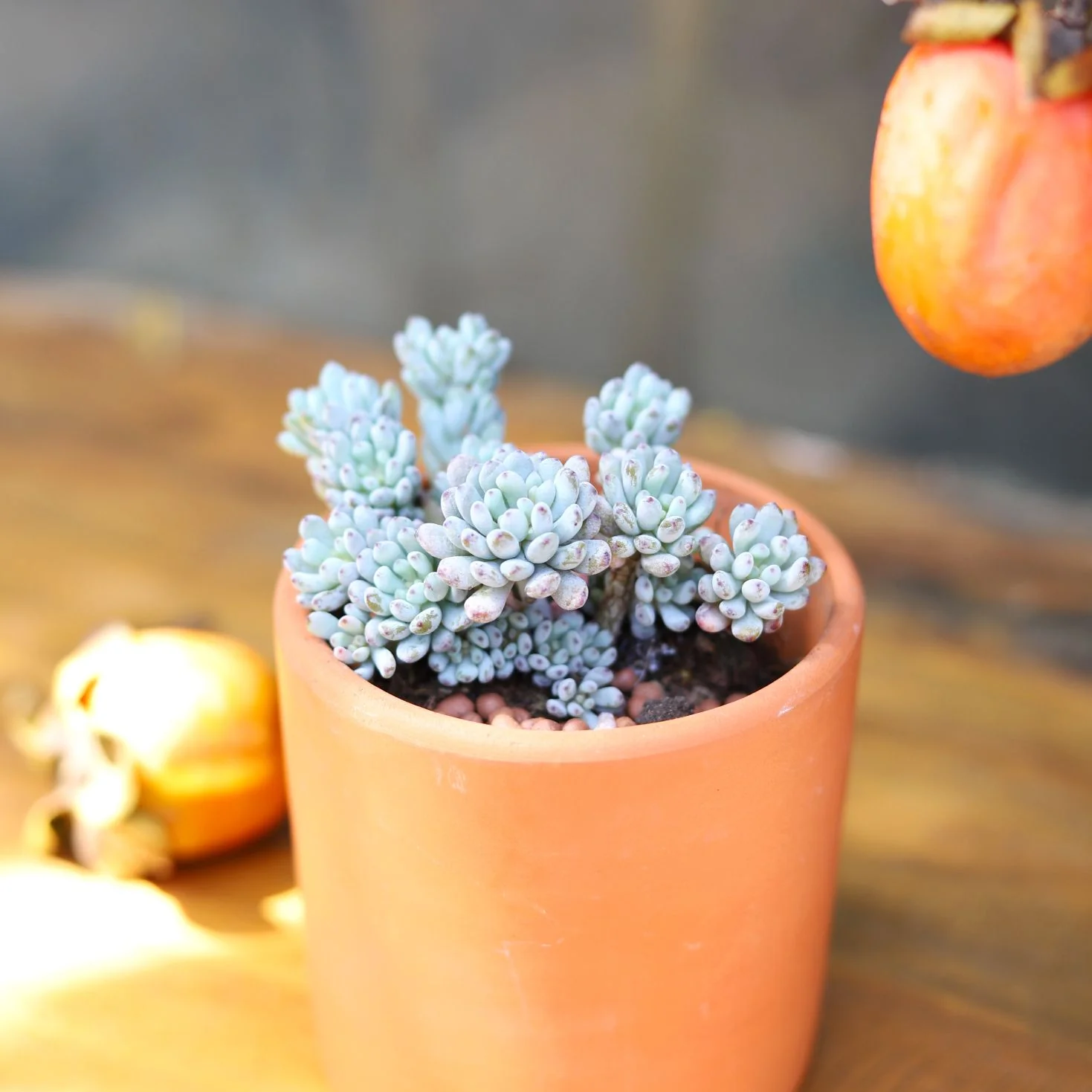
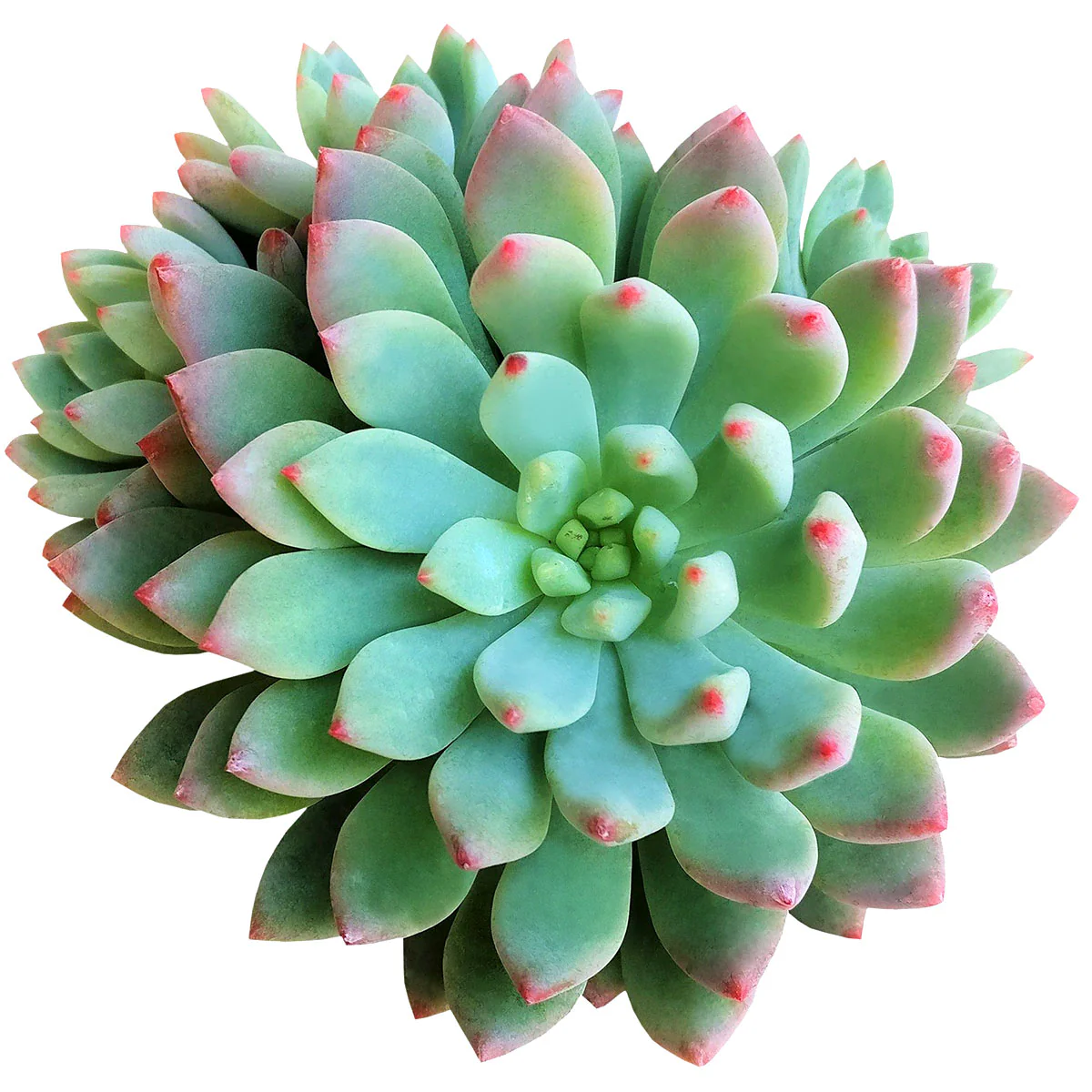
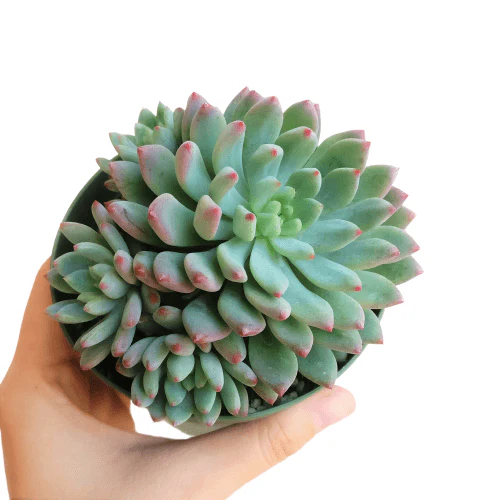
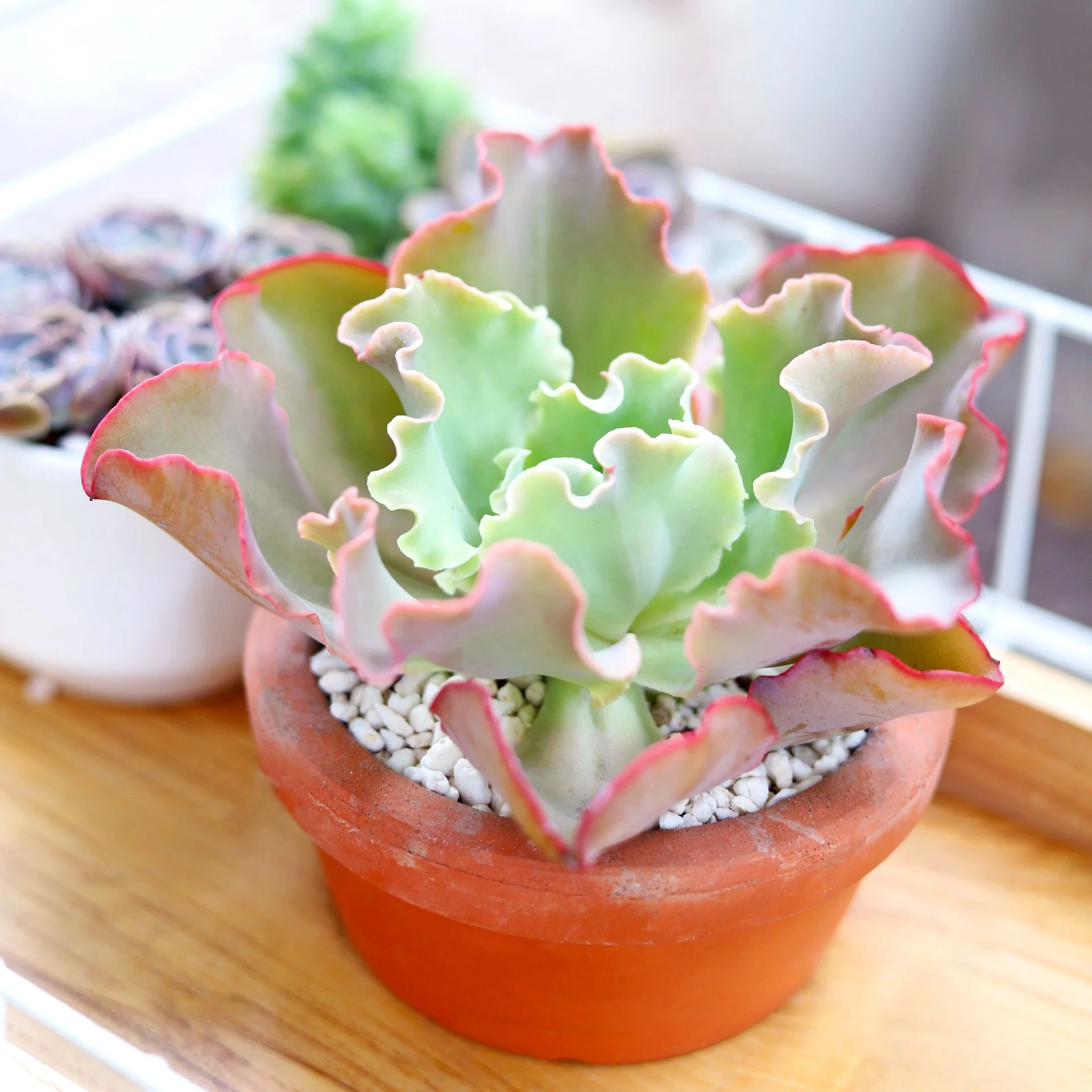
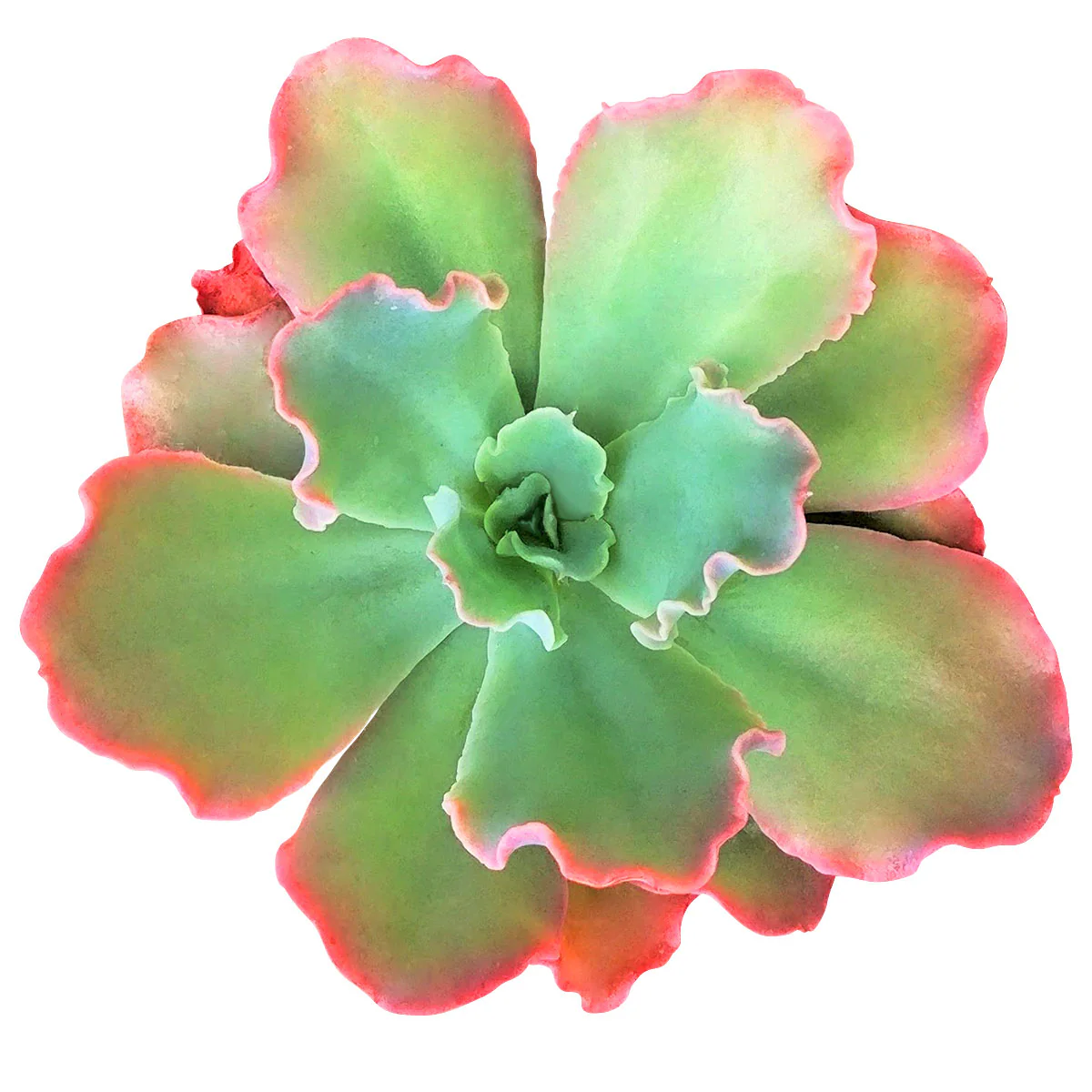
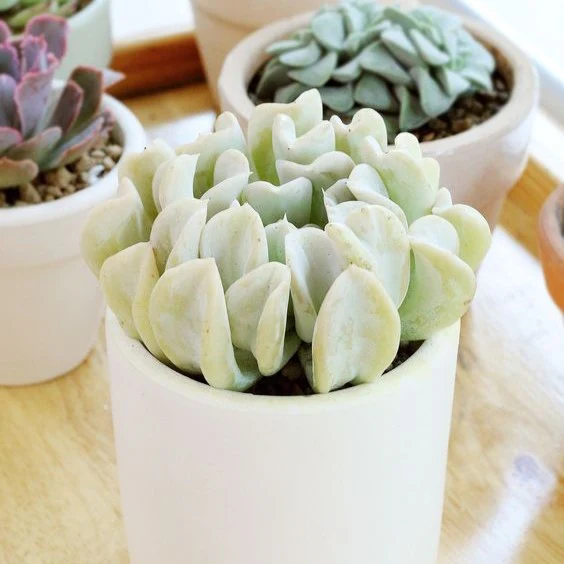
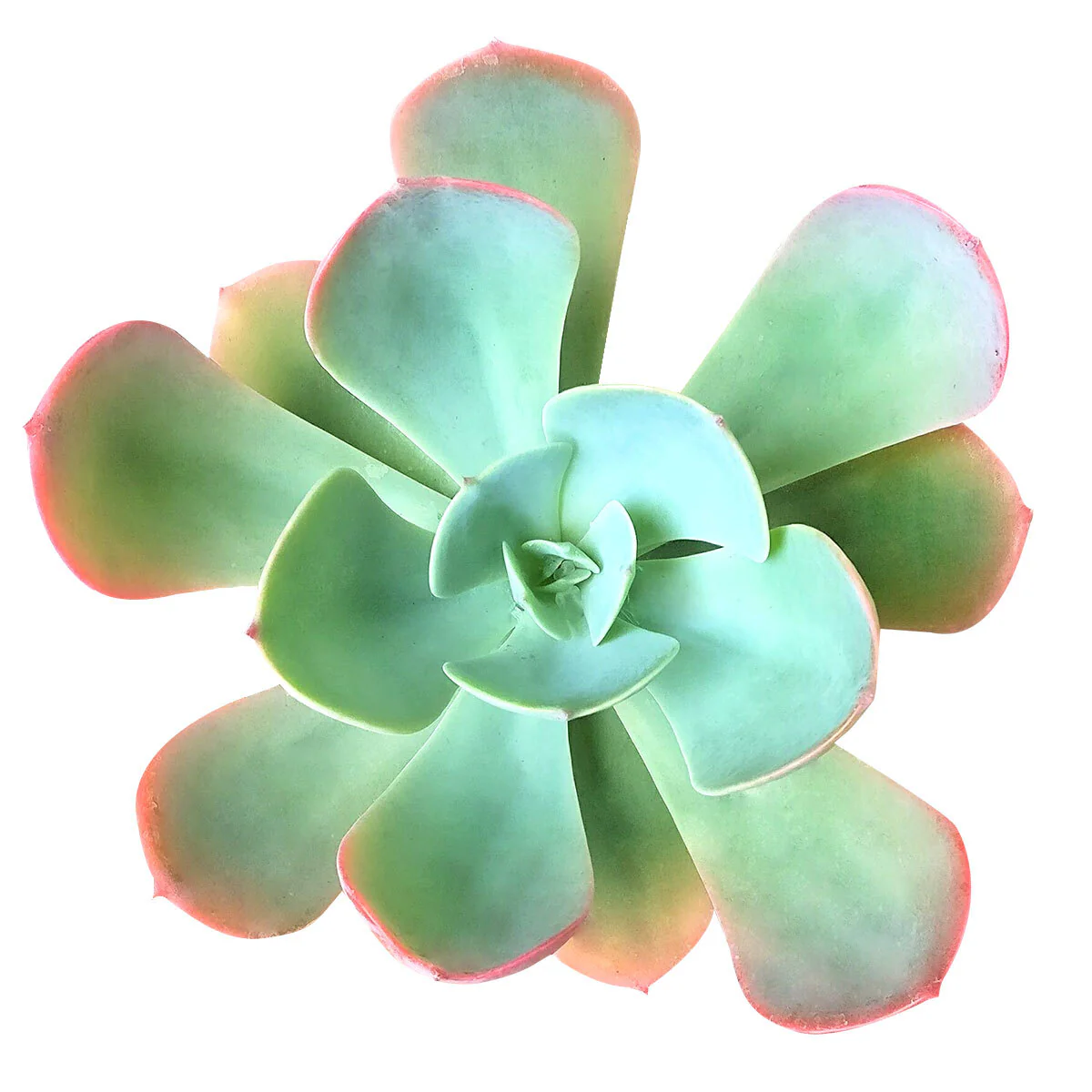
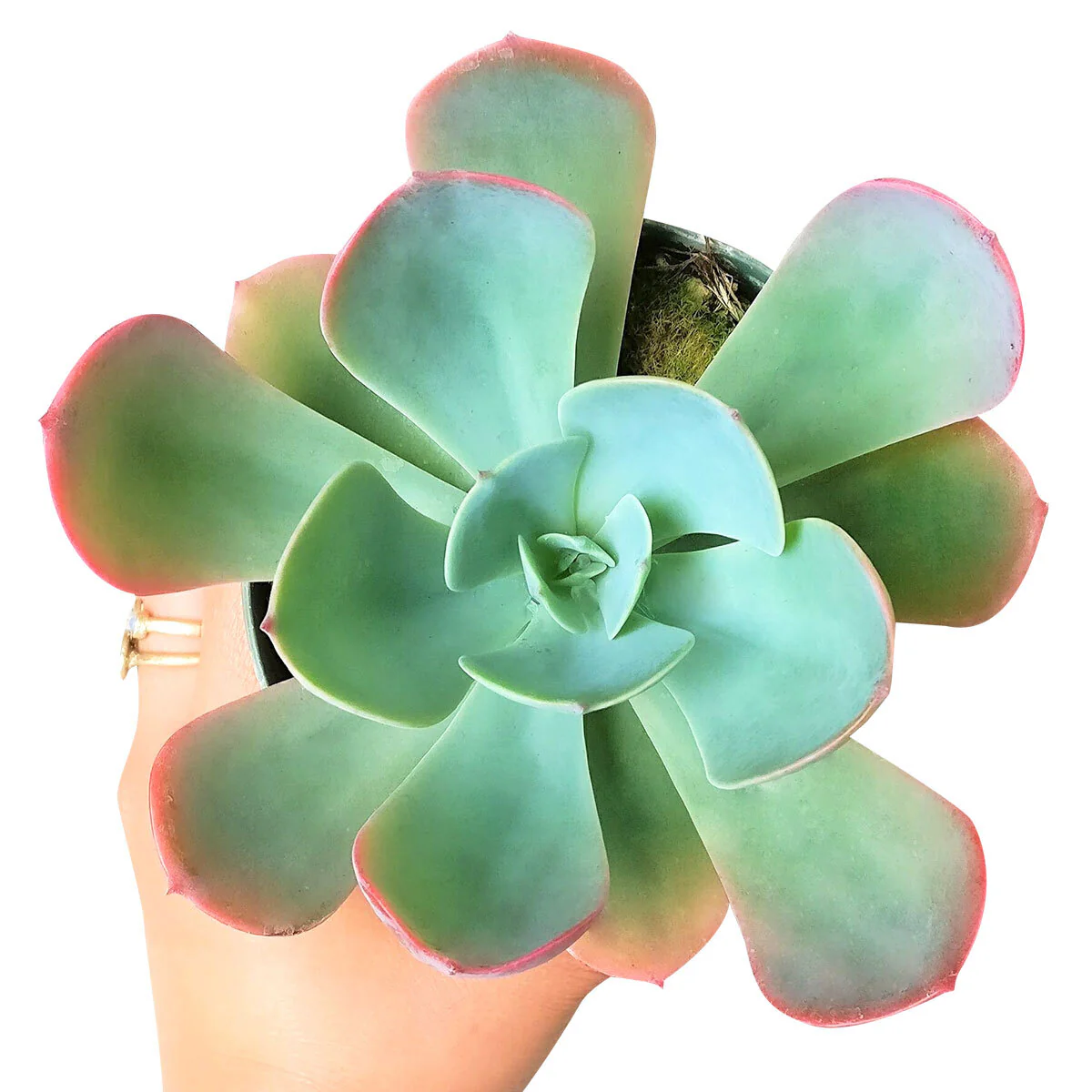
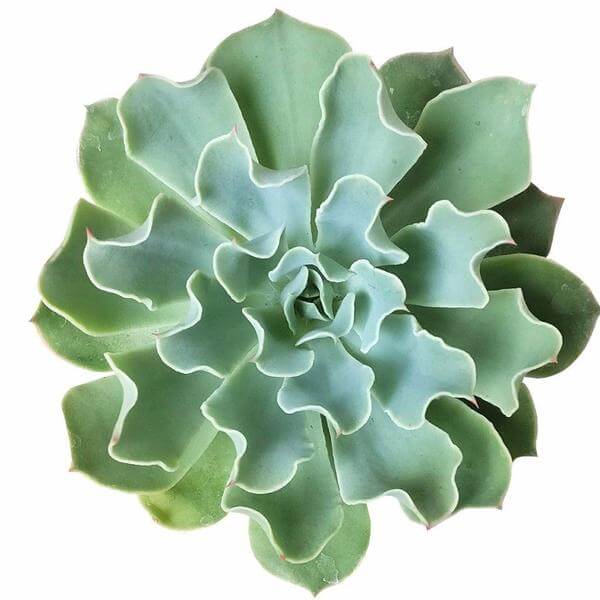
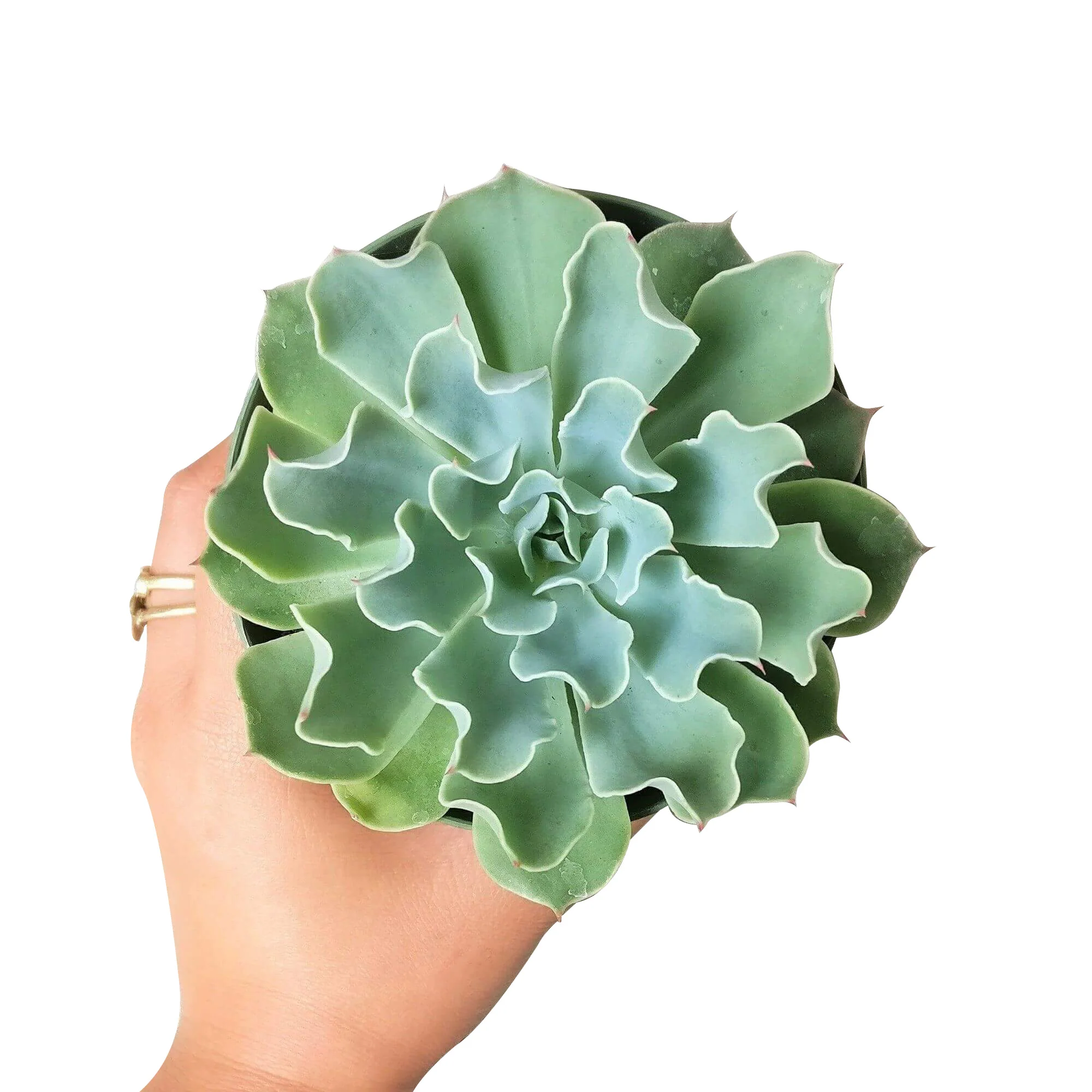
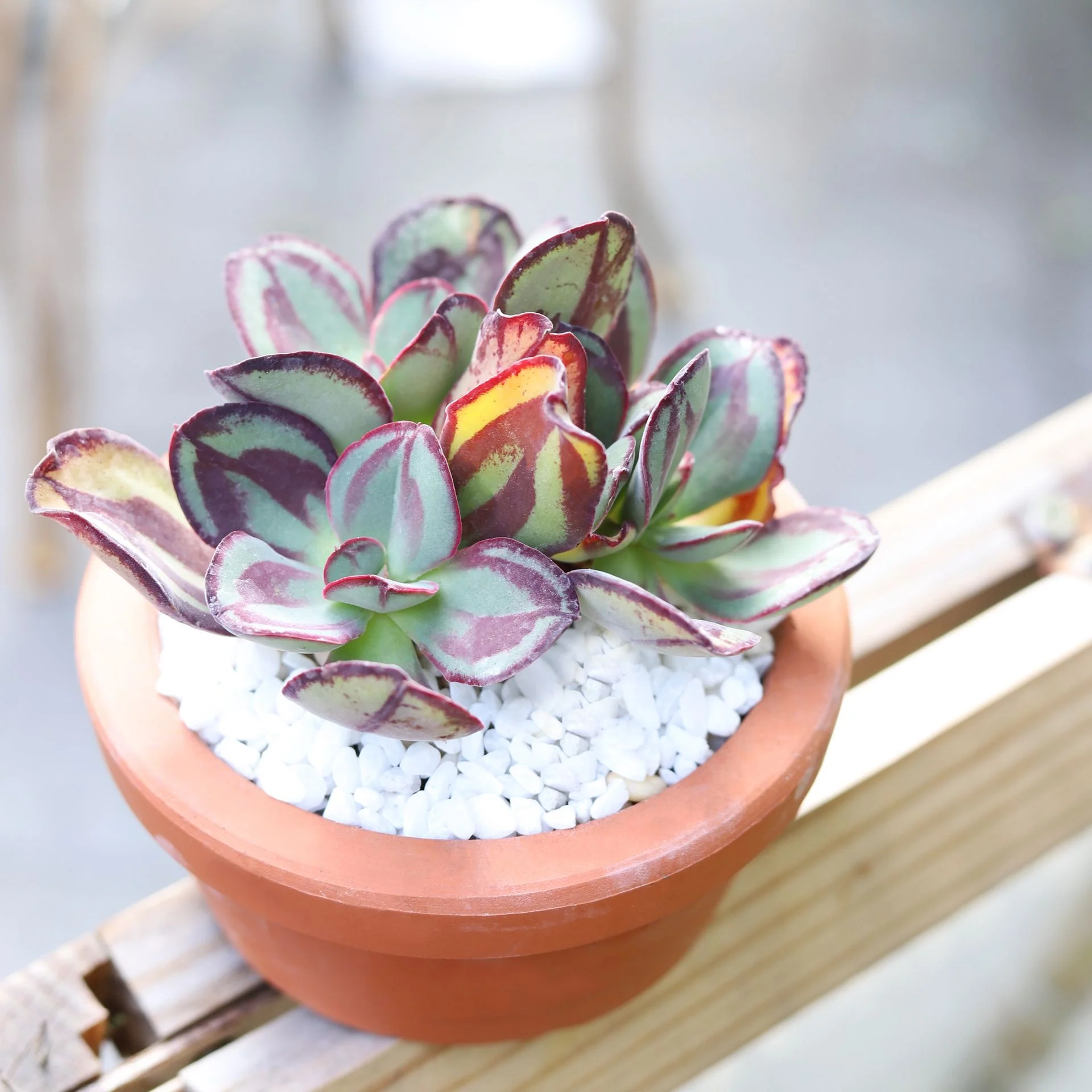
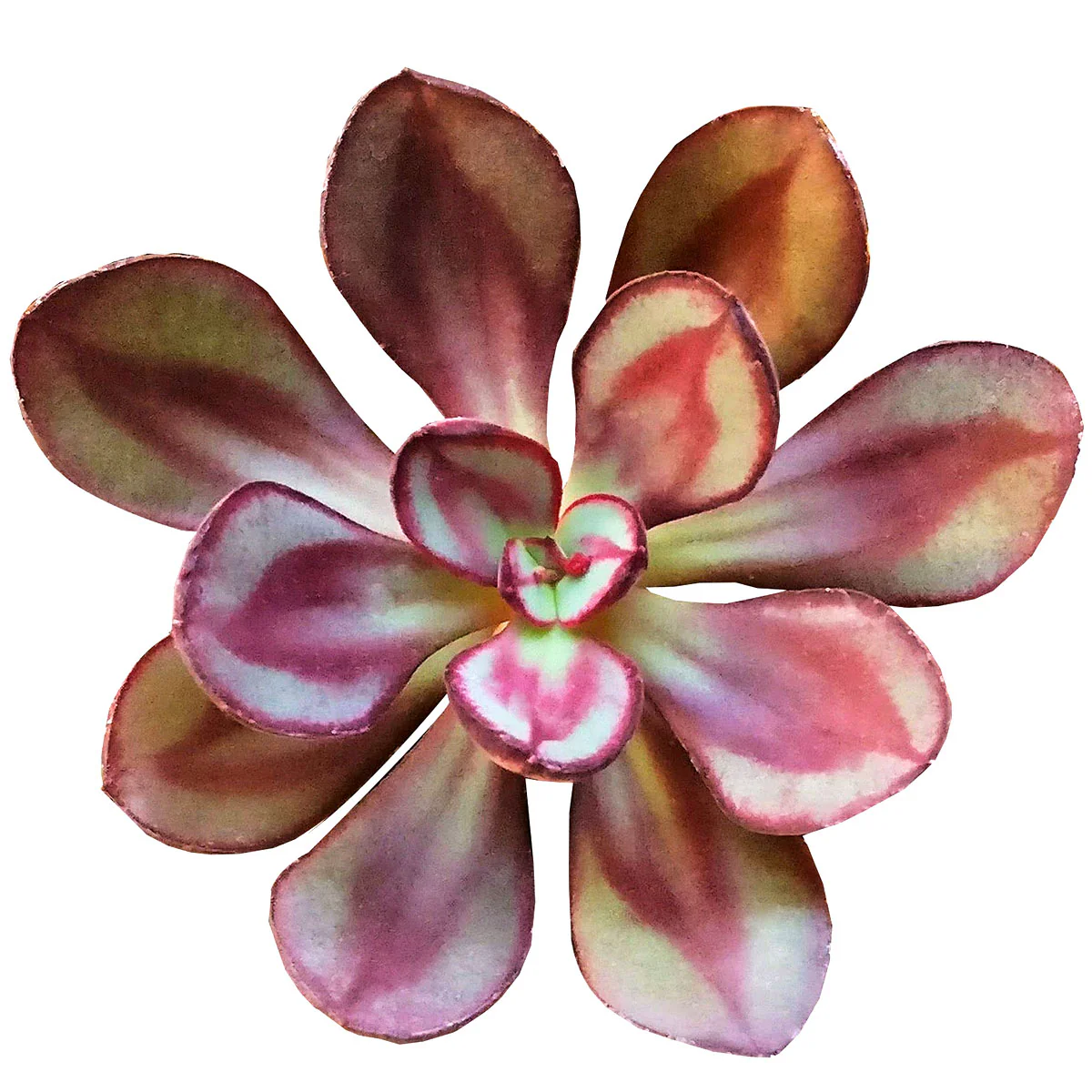
Cotyledon 'Papillaris Choco Line' is a distinctive succulent with unusual leaf texture and muted, earthy colors. A hybrid member of the Crassulaceae family, it likely shares ancestry with species native to South Africa, where Cotyledons evolved to thrive in dry, rocky environments. 'Choco Line' forms a compact, low-growing shape with thick, fleshy leaves covered in a soft layer of fine hairs, giving the plant a velvety feel. Its subtle beauty makes it a good choice for small containers, rock gardens, and detailed succulent arrangements.![]() The leaves of Papillaris Choco Line are plump, oval to slightly paddle-shaped, and tend to grow close together, creating dense, tidy rosettes. They typically appear in shades of muted green to bluish-green, often tinged with chocolate-brown or reddish edges, especially when exposed to bright light or cooler temperatures. Tiny, soft projections (papillae) on the leaf surface give the plant a lightly textured appearance, especially when viewed up close. Mature plants stay relatively small, usually reaching 6 to 10 inches tall and spreading slowly over time.
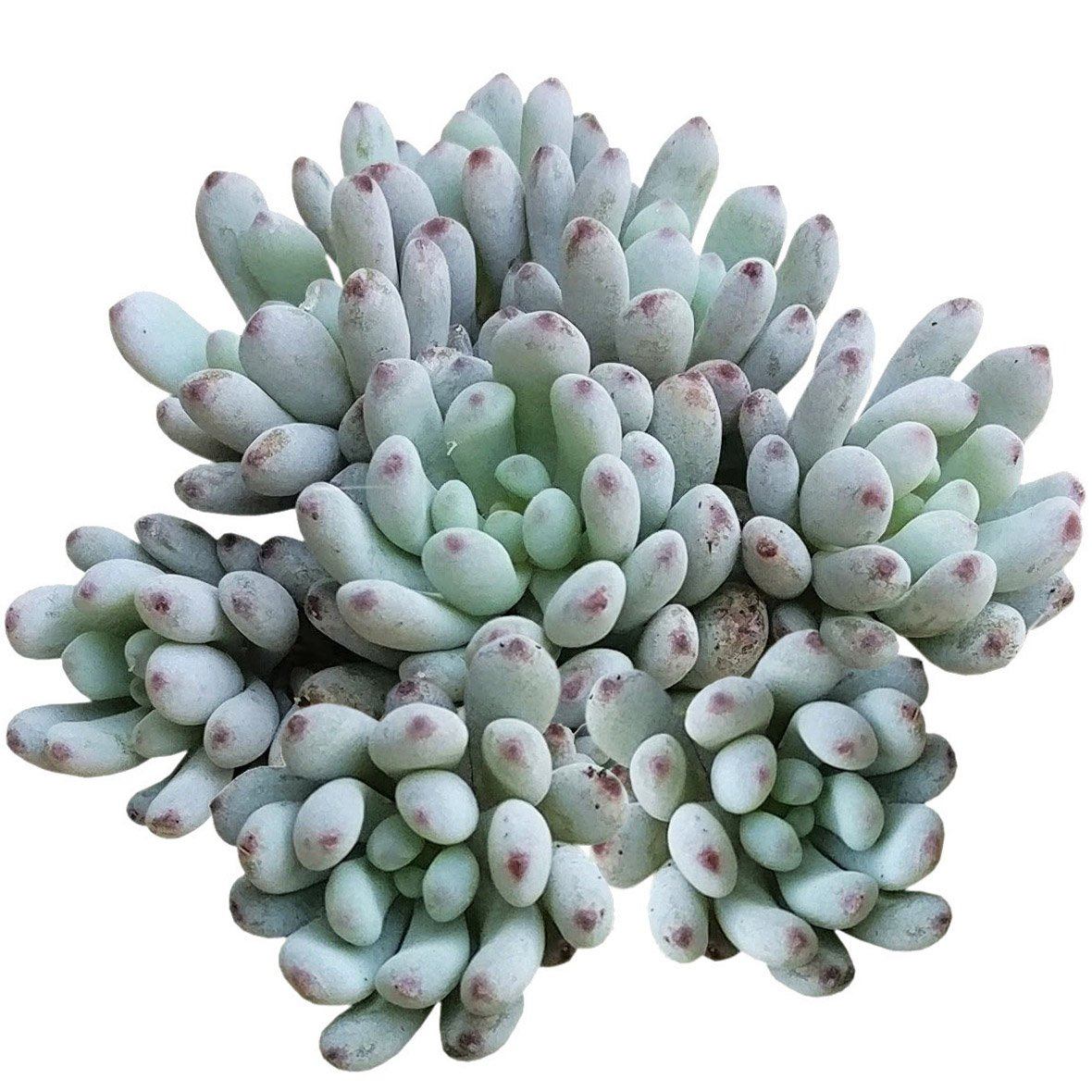
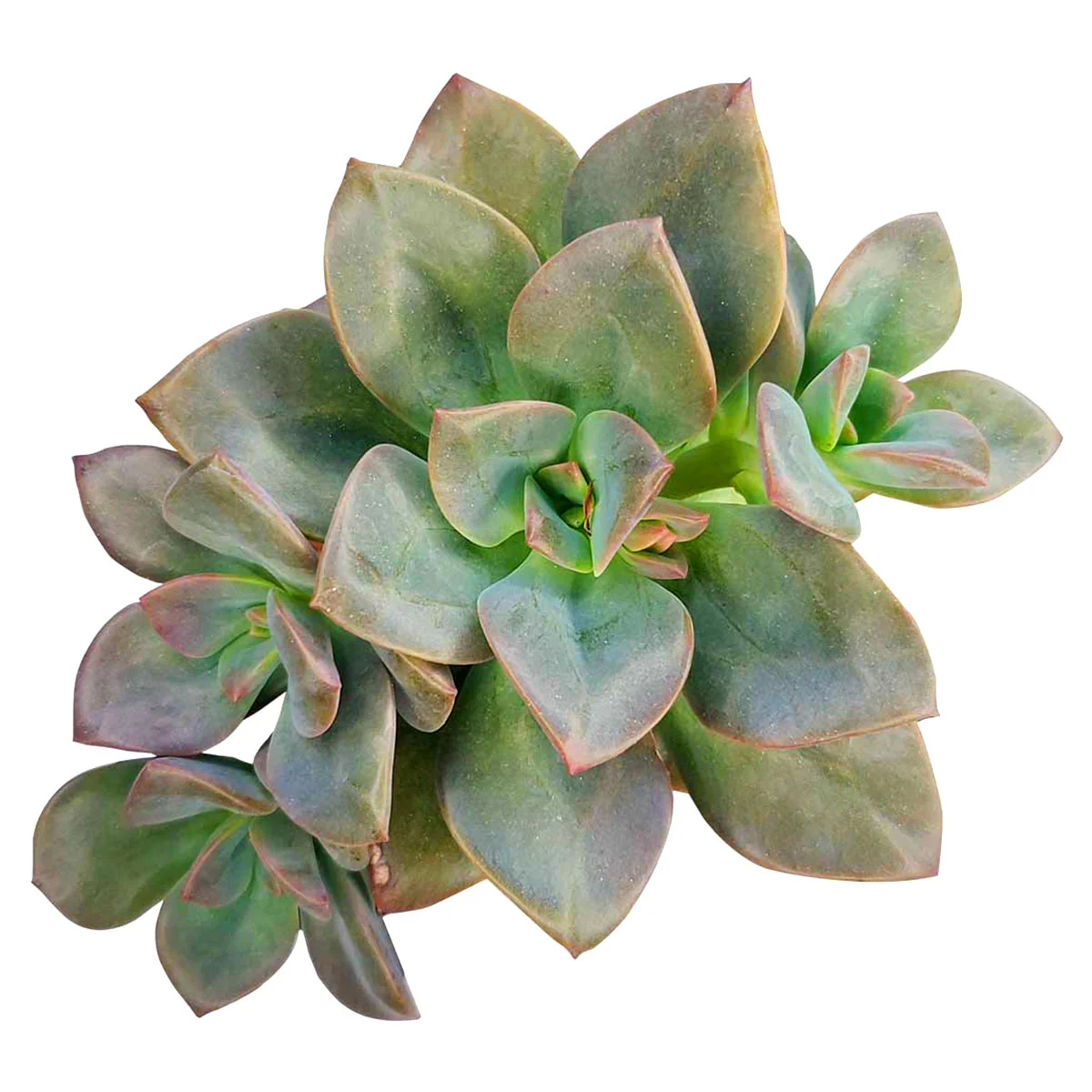
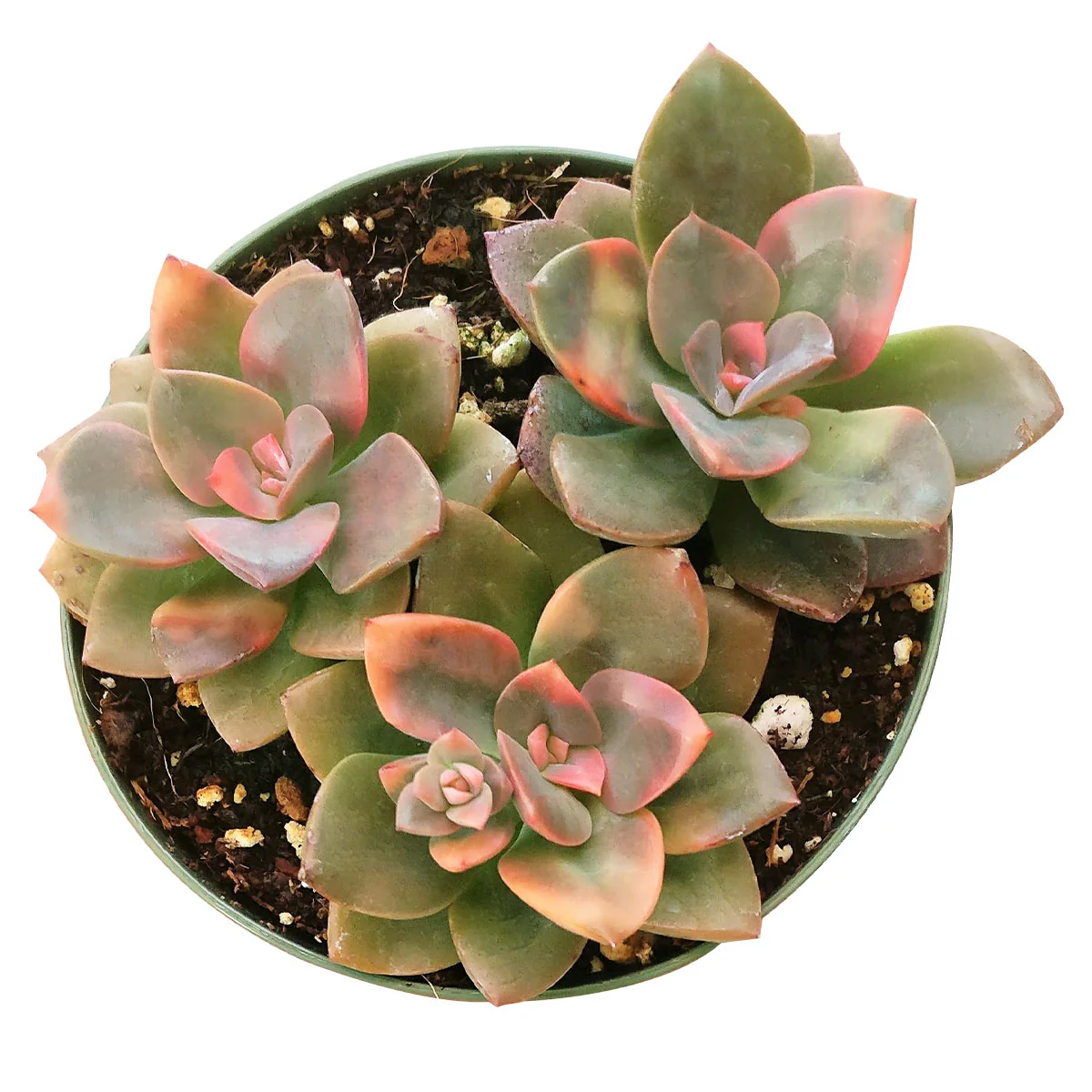
The leaves of Papillaris Choco Line are plump, oval to slightly paddle-shaped, and tend to grow close together, creating dense, tidy rosettes. They typically appear in shades of muted green to bluish-green, often tinged with chocolate-brown or reddish edges, especially when exposed to bright light or cooler temperatures. Tiny, soft projections (papillae) on the leaf surface give the plant a lightly textured appearance, especially when viewed up close. Mature plants stay relatively small, usually reaching 6 to 10 inches tall and spreading slowly over time.![]() Cotyledon species stand apart from other succulents like Echeveria or Sedum due to their woolly, protective coatings and slightly more shrub-like growth. While many succulents prefer intense sun, Cotyledons often do better with partial sun or filtered light, especially in hot climates. Their fleshy leaves are designed to store moisture efficiently, but the fine hairs also help minimize evaporation and protect against sunburn. Some Cotyledon species produce bell-shaped flowers on tall stalks, although Papillaris Choco Line is mostly grown for its foliage and may flower only rarely in cultivation.
Cotyledon species stand apart from other succulents like Echeveria or Sedum due to their woolly, protective coatings and slightly more shrub-like growth. While many succulents prefer intense sun, Cotyledons often do better with partial sun or filtered light, especially in hot climates. Their fleshy leaves are designed to store moisture efficiently, but the fine hairs also help minimize evaporation and protect against sunburn. Some Cotyledon species produce bell-shaped flowers on tall stalks, although Papillaris Choco Line is mostly grown for its foliage and may flower only rarely in cultivation.![]() Because of its compact size and interesting surface texture, Cotyledon 'Papillaris Choco Line' fits well into mixed succulent gardens or as a subtle accent in minimalist plant displays. It adds a soft, tactile element to succulent groupings without overwhelming the arrangement. Like many small Cotyledon varieties, it’s easy to maintain as long as it is kept dry, well-lit, and protected from cold.
Because of its compact size and interesting surface texture, Cotyledon 'Papillaris Choco Line' fits well into mixed succulent gardens or as a subtle accent in minimalist plant displays. It adds a soft, tactile element to succulent groupings without overwhelming the arrangement. Like many small Cotyledon varieties, it’s easy to maintain as long as it is kept dry, well-lit, and protected from cold.
-
![]() Prefers bright, indirect light or gentle morning sun. Harsh afternoon light in hot climates can cause leaf scorching.
Prefers bright, indirect light or gentle morning sun. Harsh afternoon light in hot climates can cause leaf scorching.![]() Water when the soil is completely dry, then water deeply and let it drain fully. Overwatering easily leads to rot due to its thick, moisture-retentive leaves.
Water when the soil is completely dry, then water deeply and let it drain fully. Overwatering easily leads to rot due to its thick, moisture-retentive leaves.![]() Adapts well to low indoor humidity. High humidity environments can encourage fungal problems if airflow is poor.
Adapts well to low indoor humidity. High humidity environments can encourage fungal problems if airflow is poor.![]() Grows best between 60–80°F. It should be protected from frost and cold drafts, as freezing temperatures can permanently damage the plant.
Grows best between 60–80°F. It should be protected from frost and cold drafts, as freezing temperatures can permanently damage the plant.![]() Requires a gritty, fast-draining soil mix, such as cactus or succulent soil with added sand or perlite. Good drainage is critical to prevent water buildup at the roots.
Requires a gritty, fast-draining soil mix, such as cactus or succulent soil with added sand or perlite. Good drainage is critical to prevent water buildup at the roots.![]() Feed once or twice during the growing season with a diluted, low-nitrogen fertilizer. Avoid heavy feeding, which can encourage weak, leggy growth.
Feed once or twice during the growing season with a diluted, low-nitrogen fertilizer. Avoid heavy feeding, which can encourage weak, leggy growth.![]() Cotyledon species are toxic if ingested by pets and humans, potentially causing serious illness. Keep out of reach of children and animals.
Cotyledon species are toxic if ingested by pets and humans, potentially causing serious illness. Keep out of reach of children and animals.
-
Zone 9-11
![]()
 Cotyledon 'Papillaris Choco Line' is a distinctive succulent with unusual leaf texture and muted, earthy colors. A hybrid member of the Crassulaceae family, it likely shares ancestry with species native to South Africa, where Cotyledons evolved to thrive in dry, rocky environments. 'Choco Line' forms a compact, low-growing shape with thick, fleshy leaves covered in a soft layer of fine hairs, giving the plant a velvety feel. Its subtle beauty makes it a good choice for small containers, rock gardens, and detailed succulent arrangements.
 The leaves of Papillaris Choco Line are plump, oval to slightly paddle-shaped, and tend to grow close together, creating dense, tidy rosettes. They typically appear in shades of muted green to bluish-green, often tinged with chocolate-brown or reddish edges, especially when exposed to bright light or cooler temperatures. Tiny, soft projections (papillae) on the leaf surface give the plant a lightly textured appearance, especially when viewed up close. Mature plants stay relatively small, usually reaching 6 to 10 inches tall and spreading slowly over time.
 Cotyledon species stand apart from other succulents like Echeveria or Sedum due to their woolly, protective coatings and slightly more shrub-like growth. While many succulents prefer intense sun, Cotyledons often do better with partial sun or filtered light, especially in hot climates. Their fleshy leaves are designed to store moisture efficiently, but the fine hairs also help minimize evaporation and protect against sunburn. Some Cotyledon species produce bell-shaped flowers on tall stalks, although Papillaris Choco Line is mostly grown for its foliage and may flower only rarely in cultivation.
 Because of its compact size and interesting surface texture, Cotyledon 'Papillaris Choco Line' fits well into mixed succulent gardens or as a subtle accent in minimalist plant displays. It adds a soft, tactile element to succulent groupings without overwhelming the arrangement. Like many small Cotyledon varieties, it’s easy to maintain as long as it is kept dry, well-lit, and protected from cold.
 Water when the soil is completely dry, then water deeply and let it drain fully. Overwatering easily leads to rot due to its thick, moisture-retentive leaves.
 Feed once or twice during the growing season with a diluted, low-nitrogen fertilizer. Avoid heavy feeding, which can encourage weak, leggy growth.
Select Size
Select Style
From $7.69
Cotyledon Papillaris Choco Line—
$7.69
Product Information
Product Information
Shipping & Returns
Shipping & Returns
Description
-
![]() Cotyledon 'Papillaris Choco Line' is a distinctive succulent with unusual leaf texture and muted, earthy colors. A hybrid member of the Crassulaceae family, it likely shares ancestry with species native to South Africa, where Cotyledons evolved to thrive in dry, rocky environments. 'Choco Line' forms a compact, low-growing shape with thick, fleshy leaves covered in a soft layer of fine hairs, giving the plant a velvety feel. Its subtle beauty makes it a good choice for small containers, rock gardens, and detailed succulent arrangements.
Cotyledon 'Papillaris Choco Line' is a distinctive succulent with unusual leaf texture and muted, earthy colors. A hybrid member of the Crassulaceae family, it likely shares ancestry with species native to South Africa, where Cotyledons evolved to thrive in dry, rocky environments. 'Choco Line' forms a compact, low-growing shape with thick, fleshy leaves covered in a soft layer of fine hairs, giving the plant a velvety feel. Its subtle beauty makes it a good choice for small containers, rock gardens, and detailed succulent arrangements.![]() The leaves of Papillaris Choco Line are plump, oval to slightly paddle-shaped, and tend to grow close together, creating dense, tidy rosettes. They typically appear in shades of muted green to bluish-green, often tinged with chocolate-brown or reddish edges, especially when exposed to bright light or cooler temperatures. Tiny, soft projections (papillae) on the leaf surface give the plant a lightly textured appearance, especially when viewed up close. Mature plants stay relatively small, usually reaching 6 to 10 inches tall and spreading slowly over time.
The leaves of Papillaris Choco Line are plump, oval to slightly paddle-shaped, and tend to grow close together, creating dense, tidy rosettes. They typically appear in shades of muted green to bluish-green, often tinged with chocolate-brown or reddish edges, especially when exposed to bright light or cooler temperatures. Tiny, soft projections (papillae) on the leaf surface give the plant a lightly textured appearance, especially when viewed up close. Mature plants stay relatively small, usually reaching 6 to 10 inches tall and spreading slowly over time.![]() Cotyledon species stand apart from other succulents like Echeveria or Sedum due to their woolly, protective coatings and slightly more shrub-like growth. While many succulents prefer intense sun, Cotyledons often do better with partial sun or filtered light, especially in hot climates. Their fleshy leaves are designed to store moisture efficiently, but the fine hairs also help minimize evaporation and protect against sunburn. Some Cotyledon species produce bell-shaped flowers on tall stalks, although Papillaris Choco Line is mostly grown for its foliage and may flower only rarely in cultivation.
Cotyledon species stand apart from other succulents like Echeveria or Sedum due to their woolly, protective coatings and slightly more shrub-like growth. While many succulents prefer intense sun, Cotyledons often do better with partial sun or filtered light, especially in hot climates. Their fleshy leaves are designed to store moisture efficiently, but the fine hairs also help minimize evaporation and protect against sunburn. Some Cotyledon species produce bell-shaped flowers on tall stalks, although Papillaris Choco Line is mostly grown for its foliage and may flower only rarely in cultivation.![]() Because of its compact size and interesting surface texture, Cotyledon 'Papillaris Choco Line' fits well into mixed succulent gardens or as a subtle accent in minimalist plant displays. It adds a soft, tactile element to succulent groupings without overwhelming the arrangement. Like many small Cotyledon varieties, it’s easy to maintain as long as it is kept dry, well-lit, and protected from cold.
Because of its compact size and interesting surface texture, Cotyledon 'Papillaris Choco Line' fits well into mixed succulent gardens or as a subtle accent in minimalist plant displays. It adds a soft, tactile element to succulent groupings without overwhelming the arrangement. Like many small Cotyledon varieties, it’s easy to maintain as long as it is kept dry, well-lit, and protected from cold.
-
![]() Prefers bright, indirect light or gentle morning sun. Harsh afternoon light in hot climates can cause leaf scorching.
Prefers bright, indirect light or gentle morning sun. Harsh afternoon light in hot climates can cause leaf scorching.![]() Water when the soil is completely dry, then water deeply and let it drain fully. Overwatering easily leads to rot due to its thick, moisture-retentive leaves.
Water when the soil is completely dry, then water deeply and let it drain fully. Overwatering easily leads to rot due to its thick, moisture-retentive leaves.![]() Adapts well to low indoor humidity. High humidity environments can encourage fungal problems if airflow is poor.
Adapts well to low indoor humidity. High humidity environments can encourage fungal problems if airflow is poor.![]() Grows best between 60–80°F. It should be protected from frost and cold drafts, as freezing temperatures can permanently damage the plant.
Grows best between 60–80°F. It should be protected from frost and cold drafts, as freezing temperatures can permanently damage the plant.![]() Requires a gritty, fast-draining soil mix, such as cactus or succulent soil with added sand or perlite. Good drainage is critical to prevent water buildup at the roots.
Requires a gritty, fast-draining soil mix, such as cactus or succulent soil with added sand or perlite. Good drainage is critical to prevent water buildup at the roots.![]() Feed once or twice during the growing season with a diluted, low-nitrogen fertilizer. Avoid heavy feeding, which can encourage weak, leggy growth.
Feed once or twice during the growing season with a diluted, low-nitrogen fertilizer. Avoid heavy feeding, which can encourage weak, leggy growth.![]() Cotyledon species are toxic if ingested by pets and humans, potentially causing serious illness. Keep out of reach of children and animals.
Cotyledon species are toxic if ingested by pets and humans, potentially causing serious illness. Keep out of reach of children and animals.
-
Zone 9-11
![]()