🚚 Free Worldwide Shipping on All Orders!Shop Now



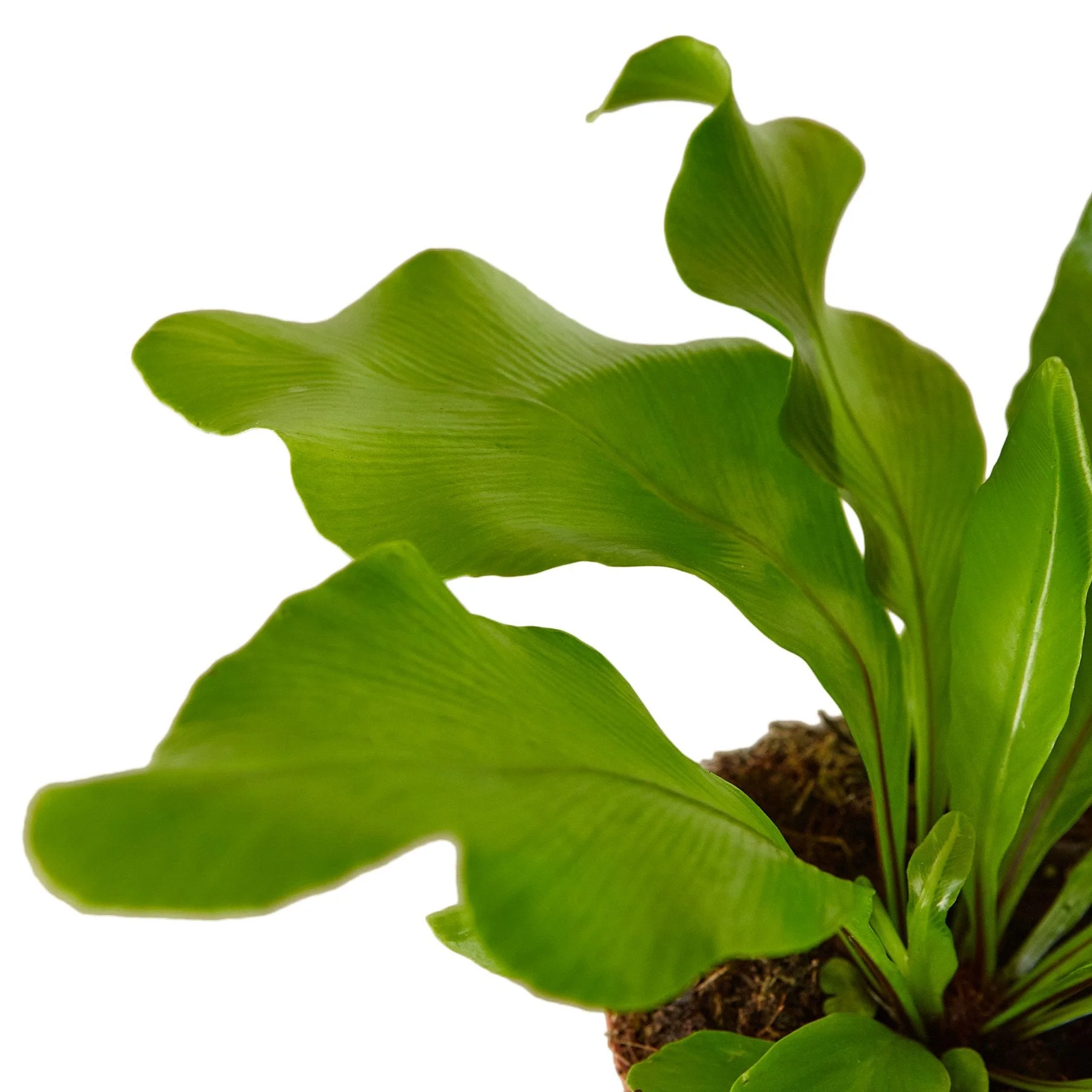


Bird's Nest 'Nidus' Fern
-
![]() Bird’s Nest Fern ‘Nidus’ (Asplenium nidus) is a striking tropical houseplant known for its wide, arching fronds that grow in a beautiful rosette shape resembling a bird’s nest. Native to the tropical regions of Asia and East Africa, this fern thrives in warm, humid rainforest environments, making it a perfect choice for adding a lush, natural feel to indoor spaces.
Bird’s Nest Fern ‘Nidus’ (Asplenium nidus) is a striking tropical houseplant known for its wide, arching fronds that grow in a beautiful rosette shape resembling a bird’s nest. Native to the tropical regions of Asia and East Africa, this fern thrives in warm, humid rainforest environments, making it a perfect choice for adding a lush, natural feel to indoor spaces.![]() Unlike flowering houseplants, the Bird’s Nest Fern does not produce showy blooms. Instead, it reproduces via spores, typically found as brown lines on the undersides of mature leaves. Its true beauty lies in its vibrant, light green foliage, which can be smooth or gently crinkled and can grow impressively large—up to 5 feet long in ideal conditions—creating a bold, sculptural statement.
Unlike flowering houseplants, the Bird’s Nest Fern does not produce showy blooms. Instead, it reproduces via spores, typically found as brown lines on the undersides of mature leaves. Its true beauty lies in its vibrant, light green foliage, which can be smooth or gently crinkled and can grow impressively large—up to 5 feet long in ideal conditions—creating a bold, sculptural statement.![]() The Bird’s Nest Fern ‘Nidus’ stands out for its large, ripple-edged fronds and elegant rosette growth habit that brings a soft, tropical look to any room. Its ability to grow quite large indoors makes it an eye-catching focal point, while its love for humidity makes it ideal for bright bathrooms or spa-like interiors. It’s also a great choice for adding texture and vibrant greenery without the need for flowers.
The Bird’s Nest Fern ‘Nidus’ stands out for its large, ripple-edged fronds and elegant rosette growth habit that brings a soft, tropical look to any room. Its ability to grow quite large indoors makes it an eye-catching focal point, while its love for humidity makes it ideal for bright bathrooms or spa-like interiors. It’s also a great choice for adding texture and vibrant greenery without the need for flowers.
-
![]() Prefers partial shade to bright, indirect light. Avoid direct sunlight, which can scorch the fronds.
Prefers partial shade to bright, indirect light. Avoid direct sunlight, which can scorch the fronds.![]() Keep soil consistently moist but not soggy. Water when the top layer begins to dry, and avoid watering directly into the center “nest.”
Keep soil consistently moist but not soggy. Water when the top layer begins to dry, and avoid watering directly into the center “nest.”![]() Use a well-draining, rich potting mix that retains some moisture (such as a peat-based or coco coir mix).
Use a well-draining, rich potting mix that retains some moisture (such as a peat-based or coco coir mix).![]() Bird’s Nest Fern ‘Nidus’ should be kept in temperatures between 60–80°F (16–27°C); protect from cold drafts and temperatures below 55°F (13°C)
Bird’s Nest Fern ‘Nidus’ should be kept in temperatures between 60–80°F (16–27°C); protect from cold drafts and temperatures below 55°F (13°C)![]() This plant moderate to fast under ideal conditions. Requires high humidity; thrives in bathrooms, kitchens, or near a humidifier.
This plant moderate to fast under ideal conditions. Requires high humidity; thrives in bathrooms, kitchens, or near a humidifier.
-
![]() USDA Zone 9–11 (commonly grown indoors in most climates)
USDA Zone 9–11 (commonly grown indoors in most climates)
 Bird’s Nest Fern ‘Nidus’ (Asplenium nidus) is a striking tropical houseplant known for its wide, arching fronds that grow in a beautiful rosette shape resembling a bird’s nest. Native to the tropical regions of Asia and East Africa, this fern thrives in warm, humid rainforest environments, making it a perfect choice for adding a lush, natural feel to indoor spaces.
 Unlike flowering houseplants, the Bird’s Nest Fern does not produce showy blooms. Instead, it reproduces via spores, typically found as brown lines on the undersides of mature leaves. Its true beauty lies in its vibrant, light green foliage, which can be smooth or gently crinkled and can grow impressively large—up to 5 feet long in ideal conditions—creating a bold, sculptural statement.
 Prefers partial shade to bright, indirect light. Avoid direct sunlight, which can scorch the fronds.
 Keep soil consistently moist but not soggy. Water when the top layer begins to dry, and avoid watering directly into the center “nest.”
 Use a well-draining, rich potting mix that retains some moisture (such as a peat-based or coco coir mix).
 Bird’s Nest Fern ‘Nidus’ should be kept in temperatures between 60–80°F (16–27°C); protect from cold drafts and temperatures below 55°F (13°C)
 This plant moderate to fast under ideal conditions. Requires high humidity; thrives in bathrooms, kitchens, or near a humidifier.
 USDA Zone 9–11 (commonly grown indoors in most climates)
Select Size
From $22.99
Bird's Nest 'Nidus' Fern—
$22.99
Product Information
Product Information
Shipping & Returns
Shipping & Returns
Description
-
![]() Bird’s Nest Fern ‘Nidus’ (Asplenium nidus) is a striking tropical houseplant known for its wide, arching fronds that grow in a beautiful rosette shape resembling a bird’s nest. Native to the tropical regions of Asia and East Africa, this fern thrives in warm, humid rainforest environments, making it a perfect choice for adding a lush, natural feel to indoor spaces.
Bird’s Nest Fern ‘Nidus’ (Asplenium nidus) is a striking tropical houseplant known for its wide, arching fronds that grow in a beautiful rosette shape resembling a bird’s nest. Native to the tropical regions of Asia and East Africa, this fern thrives in warm, humid rainforest environments, making it a perfect choice for adding a lush, natural feel to indoor spaces.![]() Unlike flowering houseplants, the Bird’s Nest Fern does not produce showy blooms. Instead, it reproduces via spores, typically found as brown lines on the undersides of mature leaves. Its true beauty lies in its vibrant, light green foliage, which can be smooth or gently crinkled and can grow impressively large—up to 5 feet long in ideal conditions—creating a bold, sculptural statement.
Unlike flowering houseplants, the Bird’s Nest Fern does not produce showy blooms. Instead, it reproduces via spores, typically found as brown lines on the undersides of mature leaves. Its true beauty lies in its vibrant, light green foliage, which can be smooth or gently crinkled and can grow impressively large—up to 5 feet long in ideal conditions—creating a bold, sculptural statement.![]() The Bird’s Nest Fern ‘Nidus’ stands out for its large, ripple-edged fronds and elegant rosette growth habit that brings a soft, tropical look to any room. Its ability to grow quite large indoors makes it an eye-catching focal point, while its love for humidity makes it ideal for bright bathrooms or spa-like interiors. It’s also a great choice for adding texture and vibrant greenery without the need for flowers.
The Bird’s Nest Fern ‘Nidus’ stands out for its large, ripple-edged fronds and elegant rosette growth habit that brings a soft, tropical look to any room. Its ability to grow quite large indoors makes it an eye-catching focal point, while its love for humidity makes it ideal for bright bathrooms or spa-like interiors. It’s also a great choice for adding texture and vibrant greenery without the need for flowers.
-
![]() Prefers partial shade to bright, indirect light. Avoid direct sunlight, which can scorch the fronds.
Prefers partial shade to bright, indirect light. Avoid direct sunlight, which can scorch the fronds.![]() Keep soil consistently moist but not soggy. Water when the top layer begins to dry, and avoid watering directly into the center “nest.”
Keep soil consistently moist but not soggy. Water when the top layer begins to dry, and avoid watering directly into the center “nest.”![]() Use a well-draining, rich potting mix that retains some moisture (such as a peat-based or coco coir mix).
Use a well-draining, rich potting mix that retains some moisture (such as a peat-based or coco coir mix).![]() Bird’s Nest Fern ‘Nidus’ should be kept in temperatures between 60–80°F (16–27°C); protect from cold drafts and temperatures below 55°F (13°C)
Bird’s Nest Fern ‘Nidus’ should be kept in temperatures between 60–80°F (16–27°C); protect from cold drafts and temperatures below 55°F (13°C)![]() This plant moderate to fast under ideal conditions. Requires high humidity; thrives in bathrooms, kitchens, or near a humidifier.
This plant moderate to fast under ideal conditions. Requires high humidity; thrives in bathrooms, kitchens, or near a humidifier.
-
![]() USDA Zone 9–11 (commonly grown indoors in most climates)
USDA Zone 9–11 (commonly grown indoors in most climates)